

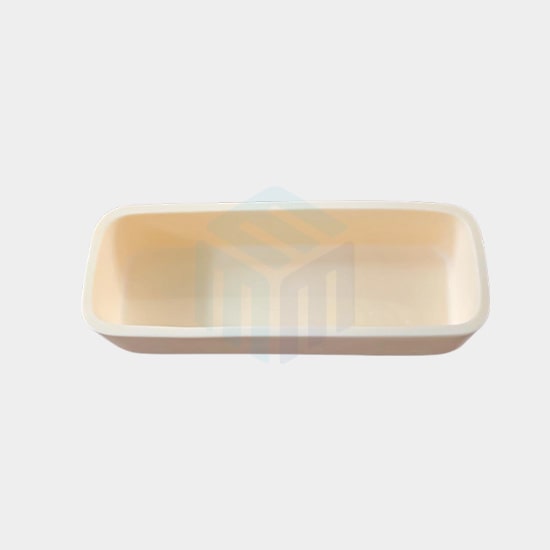
An alumina crucible is a popular choice in high-temperature applications due to its excellent thermal resistance, strength, and chemical stability. Alumina ceramic crucibles are widely used across laboratories and industries, but how do they compare to other ceramic options like zirconia, silicon carbide, and quartz? When comparing alumina crucibles with other ceramic crucibles, it’s essential to evaluate properties like thermal stability, mechanical strength, chemical resistance, and cost.
Comparison of Alumina Crucibles With Other Common Ceramic Crucibles
Alumina crucibles offer a strong balance of thermal resistance, durability, and chemical inertness at an affordable cost. Here’s how they compare with zirconia, silicon carbide, and quartz crucibles in various applications.
-
Thermal Stability
-
Alumina Crucibles:
- Temperature Resistance: Can withstand temperatures up to 1,700°C or higher.
- Thermal Shock Resistance: Moderate, making them suitable for applications with steady temperatures.
-
Zirconia Crucibles:
- Temperature Resistance: Can withstand temperatures up to 2,200°C.
- Thermal Shock Resistance: High, ideal for applications involving rapid temperature changes.
-
Silicon Carbide (SiC) Crucibles:
- Temperature Resistance: Can withstand temperatures up to 1,600°C.
- Thermal Shock Resistance: Very high, suitable for extreme thermal cycling.
-
Quartz Crucibles:
- Temperature Resistance: Up to 1,050°C.
- Thermal Shock Resistance: High, but lower than SiC and Zirconia.
-
Mechanical Strength
-
Alumina Crucibles:
- Strength: High mechanical strength, particularly in high-purity forms (99.8%).
- Durability: Resistant to deformation under high loads.
-
Zirconia Crucibles:
- Strength: Extremely high mechanical strength, even at elevated temperatures.
- Durability: Superior to alumina, especially in harsh conditions.
-
Silicon Carbide Crucibles:
- Strength: Very high, with excellent load-bearing capacity.
- Durability: Excellent, especially in abrasive or erosive environments.
-
Quartz Crucibles:
- Strength: Lower mechanical strength compared to alumina and zirconia.
- Durability: More fragile and prone to breaking under mechanical stress.
-
Chemical Resistance
-
Alumina Crucibles:
- Chemical Inertness: Highly resistant to most acids and alkalis, though vulnerable to HF and some strong bases.
-
Zirconia Crucibles:
- Chemical Inertness: Excellent resistance to a wide range of chemicals, including alkalis and acids.
-
Silicon Carbide Crucibles:
- Chemical Inertness: Resistant to most chemicals, especially in high-temperature environments.
-
Quartz Crucibles:
- Chemical Inertness: Very high resistance to acids, except for HF; low resistance to alkalis.
-
Electrical Insulation
-
Alumina Crucibles:
- Insulation: Excellent electrical insulator, making it ideal for high-temperature electrical applications.
-
Zirconia Crucibles:
- Insulation: Good electrical insulation, though slightly lower than alumina.
-
Silicon Carbide Crucibles:
- Insulation: Not an electrical insulator, as SiC is a semiconductor.
-
Quartz Crucibles:
- Insulation: Excellent electrical insulation, particularly at high frequencies.
-
Cost
-
Alumina Crucibles:
- Cost: Generally affordable, especially in lower purity grades (95-99.5%). Higher purity grades are more expensive.
-
Zirconia Crucibles:
- Cost: Expensive due to superior properties and higher processing costs.
-
Silicon Carbide Crucibles:
- Cost: Moderate to high, depending on the grade and application.
-
Quartz Crucibles:
- Cost: Generally lower than alumina and zirconia, but may vary depending on purity and size.
-
Application Suitability
-
Alumina Crucibles:
- Ideal For: High-temperature applications, chemical processing, and environments requiring good thermal and electrical insulation.
-
Zirconia Crucibles:
- Ideal For: Ultra-high temperature applications, extreme thermal cycling, and corrosive environments.
-
Silicon Carbide Crucibles:
- Ideal For: Abrasive environments, metallurgical processes, and applications with extreme thermal cycling.
-
Quartz Crucibles:
- Ideal For: Low to moderate-temperature applications, where high chemical resistance (especially to acids) is required.
Also Read: Types of Alumina Crucibles
Summary
Ceramic alumina crucibles are widely used for their excellent high-temperature resistance, mechanical strength, and chemical inertness. Affordable and reliable, they’re ideal for many aggressive environments. However, they may not perform well under rapid thermal cycling or ultra-high temperatures.
Zirconia crucibles offer better thermal shock resistance and strength but come at a higher cost. Silicon carbide crucibles are great for abrasive or high-cycling environments, while quartz crucibles suit low to moderate temperatures with strong acid resistance, though they lack high-temperature durability.
Looking for high-quality alumina ceramic crucibles or customized laboratory solutions?
Contact us at +91 9898892994 or email marketing@mkubeenterprise.co.in to discuss your requirements
M-Kube Enterprise is an Indian company catering customized laboratory products, laboratory consumables, and laboratory solutions in India, Australia, the USA, New Zealand, Singapore, Malaysia, South Korea, Dubai, the Philippines, Indonesia, and Vietnam.