


Industries widely use titanium in high-performance applications because it delivers low weight, excellent corrosion resistance, high strength, and reliable performance under demanding conditions. However, choosing the right titanium product is not simply about selecting the correct grade. The form and thickness of the material are equally important.
Depending on the application, manufacturers may require Titanium Sheets, Titanium Plate, or Titanium foil. Although these products are all manufactured from titanium, their thickness, flexibility, strength, fabrication requirements, and typical applications can differ considerably.
For industries such as aerospace, chemical processing, medical equipment, marine engineering, electronics, and research, understanding these differences can help buyers select the right product while controlling material costs.
What Is the Difference Between Titanium Sheet, Plate, and Foil?
The primary difference between titanium sheet, plate, and foil is thickness.
In general:
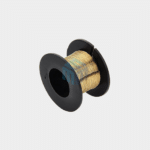
- Titanium foil – very thin and lightweight, suitable for precision and specialized applications.
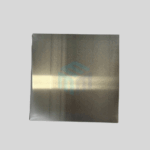
- Titanium sheet – thinner flat titanium material used for fabrication and general engineering applications.
- Titanium plate – thicker and more rigid material used where structural strength and durability are required.
The exact thickness ranges can vary between manufacturers, standards, and applications, so buyers should always specify the required dimensions and applicable material standard when requesting a quotation.
How to Choose the Right Titanium Product
Selecting between sheet, plate, and foil starts with understanding the application.
1. Consider the Required Thickness
Thickness is the first factor to evaluate.
If the application requires an extremely thin material, titanium foil may be appropriate.
For general fabrication, Titanium Sheets are often more practical.
For structural applications requiring greater thickness and rigidity, Titanium Plate may be preferable.
2. Evaluate Mechanical Requirements
Consider how much mechanical stress the material will experience.
For applications requiring:
- Structural strength
- High rigidity
- Load-bearing capability
a thicker titanium plate may be more suitable.
For applications where flexibility and lightweight construction are more important, thinner sheet or foil may provide better performance.
3. Consider Corrosion Resistance
One of titanium’s most important advantages is its excellent resistance to corrosion.
This makes titanium products suitable for challenging environments involving:
- Seawater
- Chloride-containing solutions
- Chemical processing
- Moisture
- Certain acids and industrial chemicals
However, the exact titanium grade should be selected based on the chemical environment and operating conditions.
4. Consider Fabrication Requirements
The way the material will be processed also influences product selection.
Manufacturers may need to:
- Cut
- Bend
- Roll
- Weld
- Form
- Machine
- Stamp
Thin titanium products may be more suitable for certain forming applications, while thicker plate is preferred where structural rigidity is required.
5. Consider Weight Restrictions
Weight can be an important factor in aerospace, transportation, and specialized engineering applications.
Titanium provides an excellent strength-to-weight ratio, but choosing an unnecessarily thick product can increase material weight and cost.
For lightweight applications, titanium foil sheet or thinner titanium sheet may provide a more efficient solution.
Titanium Sheet for Chemical Processing
Chemical processing is one of the major applications for titanium materials.
Titanium’s corrosion resistance makes it suitable for equipment exposed to demanding process environments.
Applications may include:
- Heat exchanger components
- Chemical tanks
- Piping components
- Process equipment
- Protective linings
Engineers should select the correct sheet thickness based on pressure, temperature, chemical exposure, and fabrication requirements.
Titanium Plate for Heavy-Duty Applications
When applications require higher structural strength, Titanium Plate provides the necessary thickness and rigidity.
Industries such as aerospace, marine engineering, and heavy chemical processing may use titanium plate for components that must withstand mechanical loads and demanding operating conditions.
The higher thickness also provides greater resistance to deformation compared with thinner sheet products.
Titanium Foil for Specialized Applications
Titanium foil is particularly useful where space and weight are limited.
Its thin profile makes it suitable for precision applications requiring:
- Minimal thickness
- Low weight
- Corrosion resistance
- Material flexibility
- Precise fabrication
Because titanium foil can require specialized manufacturing and handling, buyers should work with experienced Titanium foil Suppliers when sourcing customized sizes or thicknesses.
Choosing Reliable Titanium Suppliers
Selecting the right supplier is just as important as selecting the right titanium form.
When evaluating Titanium Sheets Suppliers, Titanium Plate Suppliers, or Titanium foil Suppliers, consider:
- Material grade and certification
- Dimensional accuracy
- Surface quality
- Thickness tolerance
- Product traceability
- Quality inspection
- Custom sizing capability
- Technical support
- Delivery capability across India
A reliable supplier should be able to recommend the appropriate titanium form based on the application rather than simply supplying a standard size.
Titanium Foil Sheet: Is It the Same as Titanium Foil?
Commercial searches may use the terms titanium foil sheet and titanium foil interchangeably.
However, buyers should focus on the actual product specifications rather than the terminology.
Important details include:
- Exact thickness
- Grade
- Width
- Length
- Tolerance
- Surface finish
Providing these specifications ensures that the supplier quotes the correct product.
Quick Selection Guide
Choosing the right titanium form can be simplified as follows:
Choose Titanium Foil If:
- Extremely thin material is required
- Minimum weight is important
- The application is specialized or precision-based
- Flexible thin material is needed
Choose Titanium Sheet If:
- You need a versatile flat material
- General fabrication is required
- Moderate thickness is sufficient
- Cutting, bending, or forming is involved
Choose Titanium Plate If:
- High rigidity is required
- The application is structural
- Heavy-duty fabrication is involved
- Greater thickness is required
Conclusion
Choosing between Titanium Sheets, Titanium Plate, and Titanium foil requires more than simply comparing prices. The correct product should match the application’s thickness, mechanical requirements, weight limitations, corrosion environment, fabrication method, and dimensional requirements.
Titanium Sheets are a versatile option for general fabrication and industrial applications, while Titanium Plate provides greater thickness and rigidity for demanding structural applications. Titanium foil suits specialized applications that require an extremely thin and lightweight material.
Looking for high-quality Titanium Sheets, Titanium Plate, or Titanium foil for your industrial, chemical, aerospace, medical, or research application?
We supply precision titanium products in different grades, thicknesses, dimensions, and finishes to meet specific application requirements across India.
📞 Call: +91 9898892994 OR 📧 Email: marketing@mkubeenterprise.co.in today for expert guidance, competitive titanium sheet price, titanium Plate price, and titanium foil price, along with reliable solutions from experienced titanium suppliers in India.