


High-temperature furnaces need heating elements that can withstand repeated exposure to heat and, in many applications, oxygen.Molybdenum disilicide MoSi₂ heating elements are widely used in high-temperature laboratory and industrial furnaces because they are designed to operate at elevated temperatures in oxidising atmospheres.One of their most important features is the formation of a protective silicon dioxide (SiO₂) layer on the element surface.
This thin, glass-like layer slows further oxidation and helps the element retain its performance during high-temperature operation. Understanding how the layer forms—and when it may not protect the element effectively—helps users select, install and operate heating elements more reliably.
What Is a Molybdenum Disilicide Heating Element?
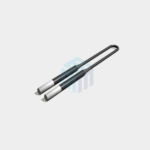
A Molybdenum Disilicide heating element is an electrically resistive component made primarily from molybdenum disilicide-based material. When current passes through the element, its electrical resistance generates heat. Manufacturers commonly produce these elements in U, W or other shapes to match the furnace layout, electrical requirements and hot-zone arrangement.
Compared with many metallic heating elements, MoSi₂-based elements perform well in very high-temperature applications. Laboratories and industries use them in laboratory furnaces, sintering systems, ceramic processing, heat treatment and materials research. To select the right element, consider the maximum furnace temperature, atmosphere, operating cycle and compatibility with the material you intend to process.
How Does the Protective SiO₂ Layer Form?
When a MoSi₂ heating element is heated in an oxygen-containing atmosphere, silicon at the surface reacts with oxygen to form silicon dioxide. At sufficiently high operating temperatures, the SiO₂ develops into a continuous, glass-like scale over the element surface. This is often described as a protective silica layer.
The layer acts as a barrier between the underlying MoSi₂ material and the surrounding atmosphere. It reduces the rate at which oxygen reaches the element beneath the surface, slowing additional oxidation. Research on MoSi₂ oxidation has shown that oxygen transport through the silica scale becomes an important factor controlling the oxidation rate at high temperatures. In normal service conditions, the layer can also reform over newly exposed surface areas, which is why it is sometimes described as self-healing.
This does not mean the element is immune to wear. The protective layer and the element’s life are influenced by temperature, atmosphere, material composition, heating and cooling cycles, contamination and mechanical handling.
Why Is the SiO₂ Layer Important?
1. It improves oxidation resistance at high temperatures
At elevated temperatures in air, an intact silica layer helps restrict continued oxidation of the MoSi₂ beneath it. This is a major reason these elements are selected for high-temperature furnace applications. The exact operating limit is grade-specific, so users should confirm the supplier’s recommended element temperature rather than relying on a general figure.
2. It supports stable operation over time
The silica scale slows the rate of further reaction at the surface. Under suitable operating conditions, this helps the element maintain useful performance across repeated heating cycles. As the element ages, its dimensions and electrical resistance can change, so inspection and appropriate control settings remain important.
3. It can re-form after limited surface damage
If a small area of the surface becomes exposed, oxygen may react with the newly exposed material and produce additional silica at elevated temperature. This self-repair behaviour can help protect the element during normal use. However, repeated cracking, abrasion, chemical attack or severe thermal cycling can damage the layer faster than it can provide effective protection.
Why Temperature Range and Atmosphere Matter
The protective behaviour of MoSi₂ is strongly temperature-dependent. At sufficiently high temperatures in an oxidising atmosphere, a continuous silica scale can form and provide effective protection. At lower intermediate temperatures, however, MoSi₂ can experience a phenomenon known as “pest oxidation,” commonly reported in a range around 400–600°C, although the precise behaviour depends on composition and conditions. During this regime, a stable, continuous protective layer may not form quickly enough, and the material can oxidise in a way that causes it to become powdery or deteriorate.
The transition between low-temperature and high-temperature oxidation is not a universal single setpoint for every product. Element composition, heating history, exposure duration and atmosphere all matter. Follow the manufacturer’s guidance for first heating, normal operation, standby and cooling. Avoid designing a cycle that holds an element for long periods in a temperature range known to be problematic for its particular grade.
Atmosphere is equally important. The familiar protective silica mechanism applies most directly to operation in air or another suitable oxidising environment. Reducing atmospheres, certain process gases, vapours, metal oxides, alkalis and other contaminants can change the oxidation behaviour or react with the protective layer. A furnace intended for inert or reducing service may require a different element selection and operating procedure.
Factors That Can Damage the Protective Layer
- Frequent or abrupt temperature changes that create thermal stresses.
- Mechanical contact, impact or abrasion during installation and maintenance.
- Contact with samples, ceramic debris, metal splashes or furnace deposits.
- Reactive vapours, alkaline compounds, fluxes or metal oxides that attack or alter the silica scale.
- Operating outside the recommended temperature range or in an atmosphere not approved for the element grade.
- Incorrect mounting, unsupported element weight or electrical settings that exceed the supplier’s limits.
The protective layer is not a substitute for correct furnace design and maintenance. Keep elements clear of samples and furnace loads, follow the specified mounting method, and inspect the hot zone for contamination or unusual deposits according to the equipment manufacturer’s instructions.
Applications of MoSi₂ Heating Elements
MoSi₂ heating elements are used where high operating temperatures and a suitable oxidising atmosphere are required. Typical applications include ceramic sintering, technical ceramics, powder metallurgy, heat treatment, glass-related research, materials testing and high-temperature laboratory work. The best element type depends on the furnace’s temperature uniformity requirements, chamber size, element geometry, power supply and operating atmosphere.
A molybdenum heating element is sometimes used as a broad search phrase, but buyers should confirm the exact material. Pure molybdenum metal elements and molybdenum disilicide (MoSi₂) elements are different products with different atmosphere requirements and operating characteristics. Clear material specifications help prevent selection errors.
What to Check Before Buying in India
When comparing MoSi₂ heating elements India suppliers offer, provide the furnace model, required working temperature, chamber dimensions, element shape and dimensions, electrical ratings, quantity and operating atmosphere. Also confirm whether the requested temperature refers to the furnace chamber or the element surface; these values are not necessarily the same.
| Purchase consideration | Why it matters |
| Element grade and maximum element temperature | Must suit the intended furnace temperature and atmosphere. |
| Shape and dimensions | Need to match the furnace design and mounting arrangement. |
| Resistance, voltage and power | Must be compatible with the furnace transformer or power controller. |
| Atmosphere and contamination risk | Can affect oxidation, compatibility and service life. |
| Quantity, availability and delivery | Influence procurement planning and replacement downtime. |
| Technical support and documentation | Helps confirm compatibility and installation requirements. |
MoSi₂ heating elements price depends on element grade, size, shape, resistance and power specifications, quantity, customisation and supplier availability. For a meaningful comparison, request a quotation based on a complete specification and confirm the documentation, warranty, and technical support included.The lowest initial price may not be the best choice if the element is unsuitable for the furnace or process conditions.
Conclusion
The protective SiO₂ layer is central to the high-temperature oxidation resistance of MoSi₂ heating elements. Formed when the element is heated in a suitable oxygen-containing atmosphere, this glass-like scale slows oxygen transport and helps protect the material beneath it. Its effectiveness still depends on operating temperature, atmosphere, thermal cycling, cleanliness and correct installation.
Before selecting a replacement or new element, confirm the furnace requirements and obtain supplier guidance for the intended operating cycle. For assistance with high-temperature furnace consumables, contact Mkube Enterprise.
Phone: +91-9925022841 Or Email: marketing@mkubeenterprise.co.in