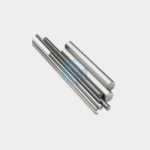



Molybdenum is a high-performance refractory metal that delivers excellent strength at high temperatures, dimensional stability, and reliable performance. Suppliers offer it in various forms, including rods, tubes, pipes, sheets, and custom-machined components for use in furnaces, electronics, glass manufacturing, and specialised industrial equipment.
The quality of a finished molybdenum product depends not only on the purity of the raw material but also on its manufacturing route. Two important processes used in producing dense molybdenum materials are sintering and swaging. Sintering consolidates compacted powder into a solid billet, while swaging applies mechanical deformation to further consolidate and shape the material.
Understanding these processes helps buyers evaluate Molybdenum Rods, tubes, and pipes for demanding applications.
1. Why Density and Structure Matter in Molybdenum Products
Molybdenum has a melting point of approximately 2623°C and is valued for its performance in high-temperature environments. Its suitability for a particular application also depends on purity, density, porosity, grain structure, and manufacturing quality.
- Density: indicates how closely the material approaches the theoretical density of molybdenum.
- Porosity: refers to voids within the material that can affect strength and consistency.
- Grain structure: influences mechanical behaviour and response to forming or heat treatment.
- Mechanical properties: strength, hardness, and ductility matter during machining and service.
- Dimensional stability: important for components exposed to elevated temperatures and thermal cycling.
A well-controlled manufacturing process helps produce material with consistent properties. The required density and mechanical characteristics should always be specified according to the application.
2. What Is Sintering in Molybdenum Manufacturing?
Sintering is a powder-metallurgy process in which compacted metal powder is heated to a high temperature below its melting point. At the elevated temperature, diffusion and bonding between neighbouring particles strengthen the compact and reduce the spaces between particles.
A typical powder-metallurgy route for molybdenum includes the following stages:
- Powder preparation: molybdenum powder is selected and prepared to meet the required chemical composition and particle characteristics.
- Compaction: the powder is pressed into a shaped compact, often a cylindrical form for subsequent rod production.
- Sintering: the compact is heated in a controlled protective atmosphere, commonly hydrogen, to promote particle bonding.
- Cooling and inspection: the sintered billet is cooled under controlled conditions and checked before further processing.
Sintering increases the strength and density of the compact and reduces porosity. The resulting billet can then undergo additional manufacturing operations such as forging, rolling, extrusion, or swaging, depending on the product and manufacturing route.
3. How Sintering Improves Molybdenum Rod Density
Before sintering, a pressed powder compact contains spaces between individual particles. During sintering, particle bonding and diffusion help consolidate the material. The extent of densification depends on factors such as powder characteristics, compaction pressure, temperature, time, and atmosphere.
- Improved particle bonding: neighbouring powder particles form stronger metallurgical bonds.
- Reduced porosity: suitable sintering conditions reduce voids left after compaction.
- Greater strength: the consolidated billet is stronger than the unsintered compact.
- More consistent structure: controlled processing supports uniformity through the billet.
- Preparation for forming: the sintered material can be further processed to achieve the required dimensions and properties.
Sintering alone may not achieve every final density or mechanical-property requirement. Additional deformation and finishing processes may therefore be used.
4. What Is Swaging and How Does It Improve Molybdenum Structure?
Swaging is a metal-forming process in which repeated radial compressive forces reduce or reshape the cross-section of a rod, bar, or suitable tubular workpiece. Rotary swaging equipment typically uses rapidly moving dies to apply repeated blows as the material passes through the forming zone.
For molybdenum, swaging is generally performed on a previously consolidated billet or rod, with the working temperature and deformation schedule selected to suit the material condition and product specification.
- The billet is prepared and, where required, heated to a suitable working temperature.
- The material is fed through the swaging machine.
- Dies apply repeated radial compressive forces to reduce or shape the cross-section.
- The operation may be repeated in stages to reach the required dimensions and deformation level.
- Further heat treatment, straightening, grinding, or inspection may be performed as required.
How Swaging Influences Density and Structure
Further consolidation: mechanical deformation can help close or reduce residual internal voids when the starting material and process conditions are suitable.
Microstructure changes: deformation changes grain shape and texture. Depending on working temperature and subsequent heat treatment, the structure may become elongated, refined, or recrystallized.
Mechanical-property changes: controlled deformation can increase strength and hardness, while its effect on ductility depends on the degree of reduction, temperature, and later processing.
Dimensional control: swaging can reduce diameter and produce a more uniform cross-section before final finishing.
Swaging does not automatically guarantee full density or a particular grain size. The result depends on billet quality, reduction ratio, temperature, tooling, and process control.
5. Sintering vs. Swaging: Understanding the Difference
| Parameter | Sintering | Swaging |
| Process type | Thermal powder-metallurgy process | Mechanical forming process |
| Starting material | Compacted molybdenum powder | Usually a consolidated billet, rod, or suitable tube |
| Main purpose | Bond powder particles and consolidate the compact | Deform, further consolidate, and shape material |
| Effect on porosity | Reduces particle-boundary voids | Can reduce residual porosity under suitable conditions |
| Effect on grain structure | Promotes bonding and grain development | Changes grain shape, texture, and deformation structure |
| Typical outcome | Sintered billet for further processing | Formed product with adjusted dimensions and properties |
6. How These Processes Relate to Molybdenum Tubes and Pipes
The manufacturing route for solid rods is not necessarily the same as the route used for tubes and pipes.Depending on the required dimensions and application, manufacturers can produce molybdenum tubes using processes such as extrusion, drawing, machining, or a combination of powder metallurgy and mechanical forming.
For example, manufacturers can machine or drill a dense billet to create a tube. They can also form and draw tubular materials to achieve the required diameter and wall thickness. In suitable manufacturing operations, they can use swaging to reduce dimensions and control the tube’s cross-section.
When sourcing a molybdenum tube, Molybdenum Tubes, or Molybdenum Pipes, buyers should confirm the manufacturing route and specify:
- Outside diameter (OD), inside diameter (ID), and wall thickness.
- Overall length and dimensional tolerances.
- Molybdenum purity or alloy grade.
- Density or other material-property requirements, where critical.
- Surface finish, straightness, and end condition.
- Quantity, application, and required inspection documents.
A capable molybdenum tube supplier should be able to clarify the product condition and provide relevant material documentation. The phrase Molybdenum Tubes Supplies may cover different product forms and manufacturing routes, so exact dimensions and requirements are important when requesting a quotation.
7. Important Quality Checks for Molybdenum Rods and Tubes
| Quality parameter | What it checks |
| Chemical composition | Confirms molybdenum purity and relevant impurity levels. |
| Density | Evaluates the degree of material consolidation. |
| Dimensional inspection | Checks diameter, length, wall thickness, and tolerances. |
| Metallographic examination | Evaluates grain structure and visible internal defects. |
| Hardness testing | Measures resistance to local indentation or deformation. |
| Tensile testing | Evaluates strength and elongation where applicable. |
| Surface inspection | Identifies cracks, scratches, laps, and other visible defects. |
For critical applications, buyers can request a Material Test Certificate (MTC), Certificate of Analysis (COA), or agreed inspection report. The inspection plan should be selected according to the product grade, dimensions, and service conditions.
8. Industrial Applications of High-Density Molybdenum Products
High-density molybdenum materials are used where high-temperature capability, strength, and dimensional stability are important. Typical applications include:
- High-temperature furnaces: components, supports, and selected hot-zone assemblies.
- Vacuum furnace systems: structural and process components for suitable vacuum environments.
- Electronics manufacturing: specialised parts and components requiring controlled material properties.
- Glass manufacturing: electrodes and components used in selected glass-melting applications.
- Aerospace and engineering: selected high-temperature parts, including components made from molybdenum alloys.
- Research laboratories: rods, tubes, and custom-machined parts for specialised experimental equipment.
The choice between pure molybdenum and an alloy such as TZM depends on temperature, mechanical loading, atmosphere, and the required material properties. Buyers should confirm the grade against the actual application.
9. Factors to Consider When Purchasing Molybdenum Rods, Tubes and Pipes
| Requirement | Information to provide |
| Product form | Rod, tube, pipe, sheet, or custom component. |
| Material grade | Pure molybdenum or specified alloy. |
| Purity | Required molybdenum percentage and impurity limits, if specified. |
| Dimensions | Diameter, length, wall thickness, ID, and OD. |
| Density | Required density or minimum acceptance criterion, if critical. |
| Quantity | Number of pieces or total weight. |
| Application | Furnace, vacuum system, electronics, glass industry, or other use. |
| Documentation | MTC, COA, inspection report, or test certificate. |
When comparing molybdenum pipe suppliers or sourcing molybdenum tubes, ask suppliers whether they offer products in sintered, swaged, forged, extruded, drawn, or machined conditions. This helps establish whether the manufacturing route is suitable for the intended application. Buyers may also use the term moly tube when searching, but should provide the full technical specification to avoid ambiguity.
Conclusion
Sintering and swaging are two important processes used in the manufacture of molybdenum products. Sintering consolidates compacted powder particles into a solid billet, while swaging applies further mechanical deformation to shape the material, modify its grain structure, and potentially reduce residual porosity.
Together with suitable heat treatment and finishing operations, these processes help manufacturers produce molybdenum rods with controlled dimensions and properties. For buyers sourcing Molybdenum Rods, Molybdenum Tubes, or Molybdenum Pipes, understanding the manufacturing route is useful when evaluating product quality and selecting materials for demanding industrial applications.
Contact M-Kube Enterprise
M-Kube Enterprise supports industrial and laboratory requirements for specialised refractory metal products and high-temperature materials.
Phone: +91 9265342741
Email: marketing@mkubeenterprise.co.in
Contact M-Kube Enterprise with your required dimensions, material grade, purity, and quantity for product enquiries and sourcing assistance.