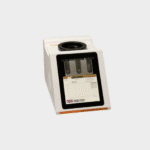



Accurate melting point determination is an important part of quality control, research, and material identification in many Indian laboratories. Pharmaceutical companies, chemical manufacturers, food laboratories, educational institutions, and research centres routinely use melting point testing to evaluate the purity and identity of solid compounds.
Traditionally, melting point determination depended heavily on visual observation. An analyst would observe the sample through the instrument and manually record the temperature at which melting began and was completed. While this method can be effective, it can also make documentation dependent on the operator’s observation and record-keeping.
Modern automatic melting point apparatus systems are changing this process by combining precise temperature control with video-based sample observation and digital documentation. A Digital melting point apparatus can capture the melting process, record temperature data, and provide a more traceable testing workflow.
For laboratories looking to improve accuracy, repeatability, and documentation, understanding the role of video-based melting point detection is increasingly important.
What Is Video-Based Melting Point Detection?
Video-based melting point detection uses a camera or optical detection system to observe the sample continuously while it is heated.
Instead of relying entirely on the analyst’s visual judgement, the system monitors changes in the sample and correlates them with temperature.
Depending on the instrument design, the system can help identify:
- Beginning of melting
- Melting progression
- Completion of melting
- Corresponding temperatures
- Sample appearance during the test
This technology is commonly incorporated into advanced melting point equipment designed for laboratory quality control and research.
Why Documentation Matters in Melting Point Testing
Recording a melting point result is not simply about writing down one temperature.
Laboratories often need to maintain records showing:
- Sample identification
- Test date
- Operator information
- Temperature conditions
- Heating rate
- Observed melting range
- Final result
- Instrument information
In regulated industries, reliable documentation is particularly important because analytical results may need to be reviewed later.
A video-based melting point measuring instrument can provide additional evidence of what occurred during the test.
Limitations of Traditional Visual Observation
Manual melting point testing requires the operator to observe the sample through the viewing system.
This approach can introduce several challenges.
1. Operator Subjectivity
Different analysts may interpret the beginning or completion of melting slightly differently.
2. Manual Recording
The operator must observe the temperature and record it correctly.
3. Limited Traceability
Once the test is completed, the laboratory may only have the recorded result rather than a visual record of the melting process.
4. Difficulty Reviewing Tests
If an unusual result occurs, it may be difficult to determine exactly what happened during the original test.
Video-based systems can help address several of these challenges.
How an Automatic Melting Point Apparatus Uses Video Detection
A modern automatic melting point apparatus typically combines several functions:
- Sample heating
- Temperature measurement
- Optical observation
- Melting detection
- Digital result recording
The sample is placed inside the appropriate capillary tubes and introduced into the heating chamber.
As the temperature increases, the optical system continuously monitors the sample.
The instrument can then associate visual changes with the measured temperature.
This creates a more structured and traceable testing process.
Benefits of Video-Based Melting Point Detection
1. Improved Test Traceability
One of the biggest advantages is improved traceability.
A video record can provide additional information about how the sample behaved during heating.
This can be particularly useful when:
- Reviewing unexpected results
- Comparing different batches
- Investigating deviations
- Training laboratory personnel
- Performing quality audits
2. Reduced Operator Dependence
Traditional testing relies heavily on the analyst’s eyes and judgement.
Video-based systems provide a consistent observation method, helping reduce variations between operators.
This is particularly valuable in laboratories where multiple analysts perform the same test.
3. Easier Result Verification
Suppose a sample produces an unexpected melting range.
With a suitable video-enabled system, the laboratory may be able to review the recorded melting process and verify whether:
- The sample melted normally
- Melting occurred gradually
- The sample decomposed
- An unusual visual change occurred
This provides additional context beyond the final temperature value.
4. Better Laboratory Records
A melting point apparatus digital system can combine test results with electronic records.
Depending on the instrument’s software and configuration, documentation may include:
- Sample identification
- Date and time
- Temperature profile
- Melting point
- Melting range
- Test conditions
- Video or image information
This can simplify laboratory record management.
Digital Melting Point Apparatus and Data Management
A Digital melting point apparatus provides more than a digital temperature display.
Modern instruments can integrate:
- Digital temperature measurement
- Programmable heating rates
- Automatic detection
- Sample observation
- Result storage
- Data transfer
This reduces the amount of manual documentation required from laboratory personnel.
For laboratories performing many tests each day, digital data management can significantly improve workflow efficiency.
Applications in Pharmaceutical Laboratories
Pharmaceutical laboratories are among the most important users of melting point testing.
Melting point analysis may be used during:
- Raw material identification
- API testing
- Purity evaluation
- Research and development
- Quality control
Video-based detection can provide additional documentation when analytical results need to be reviewed or compared.
For pharmaceutical laboratories, consistent testing and traceable records are particularly important.
Applications in Chemical Laboratories
Chemical laboratories use melting point determination for identifying and characterizing solid compounds.
A melting point instrument can help researchers:
- Compare synthesized compounds
- Check purity
- Monitor chemical development
- Characterize materials
Video recording can provide a useful visual reference during research and troubleshooting.
Applications in Food and Flavor Testing
Melting point analysis also has applications in food and flavor-related testing.
Materials such as:
- Fats
- Waxes
- Specialty ingredients
- Flavor compounds
- Chemical additives
may require thermal characterization.
A digital system helps provide consistent testing and organized documentation.
Applications in Educational and Research Laboratories
Universities and research institutions can also benefit from video-based systems.
Students and researchers can observe the complete melting process instead of relying only on the final numerical result.
This can make the technique useful for:
- Teaching analytical chemistry
- Research experiments
- Material characterization
- Method development
Video records can also be useful for demonstrating experimental results.
How Video Documentation Helps During Quality Audits
Laboratory audits often involve reviewing analytical procedures and records.
A well-documented melting point test can make it easier to demonstrate:
- What sample was tested
- How the test was performed
- What temperature was recorded
- How the melting event was detected
- Whether the result was consistent with expectations
A video-enabled melting point measuring instrument can therefore support stronger laboratory traceability.
However, laboratories should always confirm that the specific instrument’s software and data-management features meet their applicable regulatory and documentation requirements.
Why Digital Documentation Is Becoming More Important
Laboratories are increasingly moving away from purely paper-based workflows.
Digital analytical systems can help laboratories:
- Reduce transcription errors
- Organize test records
- Retrieve historical data
- Improve traceability
- Support internal quality systems
A melting point apparatus digital system can contribute to this transition by creating electronic records directly from the analytical process.
Conclusion
Video-based melting point detection represents an important advancement in laboratory thermal analysis. Instead of relying entirely on manual observation and handwritten records, modern automatic melting point apparatus systems can combine controlled heating, digital temperature measurement, optical detection, and electronic documentation.
For pharmaceutical, chemical, food, research, and quality control laboratories, these capabilities can improve test consistency while making results easier to document, review, and trace.
When selecting a Digital melting point apparatus, laboratories should consider temperature accuracy, heating control, optical detection, data management, software capabilities, and long-term service support—not just the initial melting point apparatus price.
A well-selected melting point measuring instrument can therefore become an important part of a modern, efficient, and well-documented laboratory workflow.
Looking for a reliable melting point apparatus, automatic melting point apparatus, or advanced Digital melting point apparatus for your laboratory?
We offer precision melting point equipment designed for pharmaceutical, chemical, food, research, and quality control applications across India.
📞 Call: +91 9898892994 Or 📧 Email: marketing@mkubeenterprise.co.in today for expert guidance, competitive melting point apparatus price, and the right melting point instrument for your laboratory requirements.