

Food safety and agricultural productivity depend heavily on accurate elemental and chemical analysis. Before techniques like ICP-OES or ICP-MS can measure trace elements, samples must be properly digested to release analytes into solution. This is where microwave digestion for ICP analysis plays a transformative role.
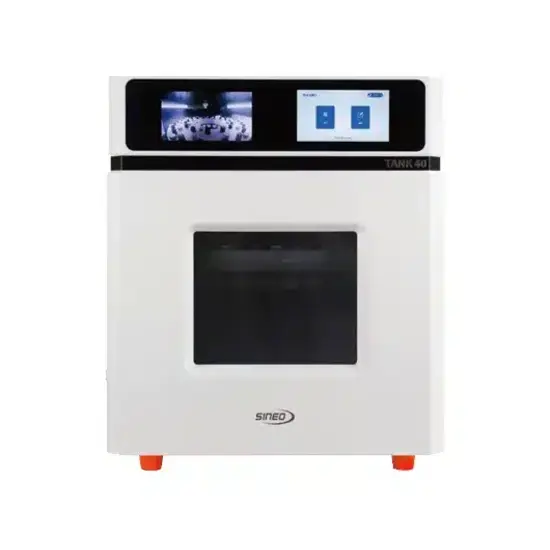
Modern laboratories now rely on advanced systems such as a Microwave Digestion Workstation, Microwave Digestor, and even integrated platforms like a Microwave Synthesis Workstation or Microwave Extraction Reaction Workstation to ensure safe, fast, and complete digestion of complex food and agricultural matrices.
Why Sample Digestion Is Critical in Food & Agriculture Testing
Food and agricultural samples often contain:
- High organic content
- Fibrous plant matrices
- Oils and fats
- Trace heavy metals
- Pesticide residues
Incomplete digestion can lead to:
- Poor analyte recovery
- Inaccurate ICP readings
- Matrix interferences
- Regulatory non-compliance
Microwave-assisted digestion significantly improves digestion efficiency, reduces contamination risk, and enhances trace element recovery compared to conventional hot plate methods.
How Microwave Digestion Works
Microwave digestion uses controlled microwave energy to heat acids inside sealed vessels under high pressure. This allows:
✔ Rapid temperature increase
✔ Elevated pressure conditions
✔ Complete breakdown of organic matrices
✔ Faster digestion cycles
Research indexed via Springer highlights that microwave-assisted digestion offers superior reproducibility and shorter preparation times compared to open-vessel digestion techniques.
Advantages of Microwave Digestion for ICP Analysis
Microwave digestion is particularly important for ICP-OES and ICP-MS because:
✔ Complete Matrix Breakdown
Closed-vessel systems achieve higher temperatures and pressures, ensuring full dissolution of tough plant and food samples.
✔ Improved Accuracy
Uniform heating reduces hot spots and incomplete digestion, leading to better elemental recovery.
✔ Lower Contamination Risk
Sealed vessels minimize environmental contamination — crucial for trace metal analysis.
Microwave digestion improves detection limits and repeatability in agricultural soil and food trace metal analysis.
Applications in Food Sample Analysis
Microwave digestion is widely used for:
- Heavy metal testing (Pb, Cd, Hg, As)
- Mineral analysis (Fe, Zn, Mg, Ca)
- Nutritional profiling
- Contaminant monitoring
Food safety regulations increasingly require validated digestion methods before ICP testing.
The Food Safety and Standards Authority of India recommends validated sample preparation procedures for accurate contaminant testing in food products.
Applications in Agricultural Testing
Agricultural laboratories use microwave digestion for:
- Soil nutrient analysis
- Fertilizer quality testing
- Plant tissue mineral content
- Environmental contamination studies
Because soils contain silicates and resistant minerals, conventional digestion can be incomplete. Microwave digestion ensures consistent mineral recovery for accurate agronomic decisions.
Conclusion
Microwave digestion has become a cornerstone technology in food and agricultural laboratories. By ensuring complete sample breakdown, minimizing contamination, and enhancing ICP accuracy, it significantly improves analytical reliability.
From heavy metal testing in food products to nutrient analysis in agricultural soils, a modern Microwave Digestion Workstation or Microwave Digestor provides the speed, safety, and repeatability required in today’s regulatory and research-driven environment.
Investing in advanced microwave-based systems not only improves lab throughput but also strengthens data confidence and compliance.
Looking for a high-performance Microwave Digestion Workstation, Microwave Digestor, or advanced Microwave Synthesis Reaction Workstation for ICP analysis?
📞 Call +91 9898892994
📧 Email marketing@mkubeenterprise.co.in Get expert guidance and competitive pricing for reliable microwave digestion solutions tailored to your laboratory needs.