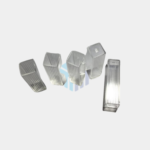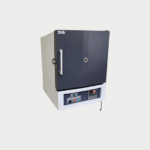



Accurate elemental analysis is essential in industries such as mining, metallurgy, cement, environmental testing, pharmaceuticals, ceramics, and advanced materials research. Techniques like X-ray Fluorescence (XRF) and Inductively Coupled Plasma (ICP) spectroscopy provide highly precise chemical composition data, but the reliability of these analyses depends greatly on proper sample preparation.
One of the most important sample preparation steps is calcination, a thermal process used to remove moisture, volatile compounds, and organic matter while stabilizing the sample before analysis. During this process, quartz tubes play a vital role by providing a clean, chemically inert, and high-temperature-resistant environment.
Whether using a quartz tube furnace, fused quartz tubes, or quartz glass tubes, laboratories rely on quartz components to ensure contamination-free heating and consistent analytical results.
What Is Calcination?
Calcination is a controlled heating process in which materials are heated to elevated temperatures below their melting point to induce physical or chemical changes.
Calcination is commonly performed to:
- Remove moisture
- Eliminate volatile impurities
- Burn off organic matter
- Decompose carbonates
- Improve sample homogeneity
- Prepare samples for elemental analysis
Proper calcination improves the accuracy and repeatability of XRF and ICP testing.
Understanding XRF and ICP Analysis
X-Ray Fluorescence (XRF)
XRF is a non-destructive analytical technique used to determine the elemental composition of solid materials.
Applications include:
- Mining
- Cement
- Geological samples
- Metals
- Ceramics
- Environmental testing
Accurate sample preparation is essential for reliable XRF measurements.
Inductively Coupled Plasma (ICP)
ICP spectroscopy measures trace and major elements with extremely high sensitivity.
Common applications include:
- Water analysis
- Pharmaceutical testing
- Food analysis
- Chemical research
- Metallurgy
- Environmental laboratories
Proper thermal pretreatment ensures better digestion efficiency and more accurate ICP results.
Role of Quartz Tubes in Calcination Before XRF and ICP
1. Preventing Sample Contamination
One of the biggest concerns during sample preparation is contamination.
Metal containers may introduce unwanted elements that interfere with analytical results.
A quartz glass tube is highly inert and contributes virtually no impurities to the sample.
This is especially important for trace element analysis.
2. High Temperature Resistance
Calcination temperatures often range between 500°C and 1200°C depending on the sample.
A high temperature quartz tube easily withstands these temperatures while maintaining dimensional stability.
This ensures safe and consistent sample heating.
3. Excellent Chemical Resistance
Laboratory samples may contain:
- Acids
- Oxides
- Mineral compounds
- Ceramic powders
- Geological materials
Fused quartz tubes resist most chemical reactions encountered during calcination, helping maintain sample integrity.
4. Uniform Heat Distribution
Consistent heating is essential for complete calcination.
A quartz tube furnace provides:
- Uniform temperature distribution
- Stable heating conditions
- Improved sample consistency
This leads to better analytical reproducibility.
5. Thermal Shock Resistance
During laboratory operations, quartz tubes frequently undergo repeated heating and cooling cycles.
A furnace quartz tube offers excellent resistance to thermal shock, reducing the likelihood of cracking when handled correctly within its operating limits.
This contributes to longer service life and reduced replacement costs.
Importance of Quartz Tube Furnaces
A quartz tube furnace combines controlled heating with the exceptional properties of quartz materials.
These systems are widely used for:
- Calcination
- Ash determination
- Heat treatment
- Material synthesis
- Thermal decomposition
- Catalyst preparation
A quartz tube furnace in India is commonly found in universities, research institutes, quality control laboratories, and industrial R&D centres.
Quartz Thermocouple Tubes in Laboratory Furnaces
Accurate temperature measurement is essential during calcination.
A quartz thermocouple tube protects thermocouples from:
- Corrosive vapours
- Dust
- Chemical attack
- Mechanical damage
Benefits include:
- Improved temperature accuracy
- Longer thermocouple life
- Reduced maintenance
- Better process consistency
Demand for quartz thermocouple tube in India has increased with the growth of advanced analytical laboratories.
Role of Quartz Rods and Fused Silica Components
Besides tubes, laboratories also use supporting quartz components.
Quartz Rods
Quartz rods are commonly used for:
- Sample positioning
- Fixture support
- High-temperature handling
Fused Quartz Rods
Fused quartz rods offer:
- High purity
- Excellent thermal stability
- Superior dimensional accuracy
Fused Silica Rods
Fused silica rods are widely used in:
- Laboratory furnace assemblies
- Analytical equipment
- Research instruments
These components contribute to reliable high-temperature processing.
Conclusion
Proper sample preparation is fundamental to obtaining accurate XRF and ICP analytical results, and calcination is one of the most critical stages in that process. Quartz tubes, fused silica tubes, and quartz glass tubes provide the high purity, thermal stability, and chemical resistance needed to ensure contamination-free heating and reliable analytical performance.
Whether used in a quartz tube furnace, as a quartz thermocouple tube, or alongside quartz rods and fused silica rods, quartz components continue to support high-precision laboratory workflows across India. As analytical testing becomes more sophisticated, high-quality Quartz Tube India solutions will remain essential for laboratories seeking accurate and repeatable results.
Looking for premium-quality quartz tubes, fused quartz tubes, quartz thermocouple tubes, or complete quartz tube furnace solutions for laboratory and analytical applications?
📞 Call: +91 9898892994 OR 📧 Email: marketing@mkubeenterprise.co.in for expert guidance on quartz tube furnace in India and customized quartz solutions for your laboratory requirements.