

The rapid growth of electric vehicles (EVs) is transforming the global automotive industry, with India playing an increasingly important role in battery manufacturing, research, and innovation. As manufacturers strive to improve battery performance, safety, charging speed, and lifespan, advanced thermal processing technologies have become essential to battery material development.
Among the most important laboratory equipment used in battery research is the tube furnace. From synthesizing cathode and anode materials to heat-treating solid electrolytes and developing next-generation battery chemistries, laboratory tube furnaces provide the precise temperature control and controlled atmospheres required for reliable experimental outcomes.
Modern Atmosphere Furnace systems and controlled atmosphere furnaces are enabling researchers to produce high-quality battery materials while minimizing contamination and oxidation. As India’s EV ecosystem expands, demand for high-performance tube furnace India solutions continues to rise.
Why Tube Furnaces Are Essential in EV Battery Research
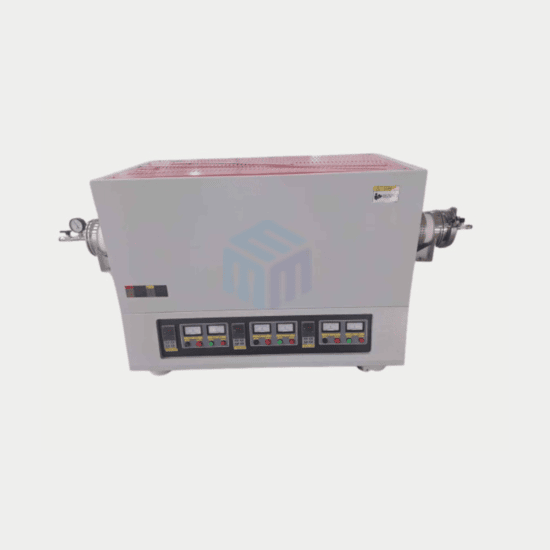
A tube furnace is a high-temperature heating system designed with a cylindrical heating chamber that accommodates quartz, alumina, or ceramic tubes. Unlike conventional furnaces, tube furnaces allow samples to be heated under carefully controlled atmospheric conditions.
Key features include:
- Precise temperature control
- Uniform heating
- Controlled gas flow
- High-temperature capability
- Reduced contamination
- Excellent repeatability
These characteristics make lab tube furnaces indispensable for advanced battery research and material development.
Emerging Applications of Tube Furnaces in EV Battery Research
1. Cathode Material Synthesis
Cathode materials largely determine battery capacity and performance.
Common materials include:
- Lithium Iron Phosphate (LFP)
- Nickel Manganese Cobalt (NMC)
- Lithium Cobalt Oxide (LCO)
- High-nickel cathodes
A laboratory tube furnace enables researchers to precisely control calcination temperatures and heating profiles, ensuring uniform crystal formation and improved electrochemical performance.
2. Anode Material Development
The demand for high-capacity anode materials has led researchers to explore:
- Graphite
- Silicon
- Silicon-carbon composites
- Hard carbon
- Lithium titanate
These materials often require controlled heat treatment under inert atmospheres.
A controlled atmosphere furnace helps prevent oxidation while producing high-quality anode materials with improved conductivity and stability.
3. Solid-State Battery Research
Solid-state batteries are considered one of the most promising next-generation energy storage technologies.
Researchers use tube furnaces for:
- Ceramic electrolyte synthesis
- Solid electrolyte sintering
- Interface engineering
- Material densification
Accurate temperature control ensures the desired crystal structures and ionic conductivity required for high-performance solid-state batteries.
4. Carbon Coating Processes
Many battery materials receive carbon coatings to improve electrical conductivity.
A controlled atmosphere heat treatment furnace allows carbon coating under nitrogen or argon atmospheres while minimizing oxidation.
Benefits include:
- Improved conductivity
- Better rate capability
- Enhanced battery efficiency
- Longer cycle life
5. Heat Treatment of Electrode Materials
Heat treatment improves the structural stability of battery materials.
Applications include:
- Annealing
- Stress relief
- Defect reduction
- Particle optimization
A high temperature tube furnace ensures consistent heating profiles that improve battery performance and repeatability.
6. Development of Sodium-Ion Batteries
As India explores alternatives to lithium-ion technology, sodium-ion batteries are receiving increased research attention.
Tube furnaces are widely used for:
- Sodium cathode synthesis
- Carbon anode development
- Electrolyte material processing
- Material characterization
Their flexibility supports the development of cost-effective and sustainable battery technologies.
7. Battery Recycling Research
Battery recycling has become an important focus area for sustainable manufacturing.
Researchers use tube furnaces for:
- Metal recovery
- Thermal decomposition
- Material regeneration
- Recycling process optimization
Controlled heating improves recovery efficiency while reducing environmental impact.
Why Controlled Atmosphere Muffle Furnaces Are Also Used
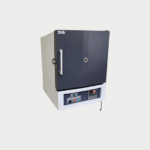
While tube furnaces dominate battery material synthesis, a controlled atmosphere muffle furnace also finds applications in:
- Powder heat treatment
- Material aging
- Sample conditioning
- Thermal stability studies
Depending on sample geometry and research objectives, laboratories may use both furnace types as complementary thermal processing systems.
Features Researchers Look for in a Laboratory Tube Furnace
When selecting a lab tube furnace, researchers typically evaluate:
1. Temperature Capability
Battery materials often require processing between 800°C and 1700°C.
The selected furnace should provide stable operation throughout the required range.
2. Temperature Uniformity
Uniform heating ensures:
- Consistent particle growth
- Better phase formation
- Improved material quality
3. Atmosphere Control
Advanced battery research often requires:
- Nitrogen atmosphere
- Argon atmosphere
- Vacuum operation
- Controlled gas flow
A reliable controlled atmosphere heat treatment furnace provides precise gas management.
4. Heating Rate Control
Programmable heating profiles help researchers optimize:
- Calcination
- Annealing
- Sintering
- Cooling cycles
5. Automation and Data Logging
Modern tube furnace India solutions offer:
- Digital touch-screen controllers
- Programmable temperature profiles
- Data recording
- Remote monitoring
- Safety alarms
These features improve research efficiency and documentation.
Factors Affecting Tube Furnace Price
The tube furnace price depends on several factors, including:
- Maximum operating temperature
- Heating zone length
- Tube material
- Temperature uniformity
- Controller type
- Atmosphere capability
- Automation features
- Safety systems
Advanced controlled atmosphere furnaces generally require a higher investment due to specialized gas handling systems and enhanced thermal control.
Conclusion
The rapid advancement of electric vehicle technology has significantly increased the importance of tube furnaces in battery research and development. From synthesizing cathode and anode materials to supporting solid-state battery innovation and recycling technologies, laboratory tube furnaces play a crucial role in developing safer, more efficient, and longer-lasting energy storage systems.
By combining precise thermal control with advanced gas management, modern controlled atmosphere furnaces help researchers achieve consistent material quality while supporting the next generation of battery technologies. As India’s EV ecosystem continues to expand, investing in reliable tube furnace India solutions will remain essential for research institutions, universities, and battery manufacturers.
Looking for a high-performance tube furnace or controlled atmosphere furnace for EV battery research, material development, or advanced thermal processing?
We offer precision-engineered laboratory tube furnaces, high temperature tube furnaces, and customized Atmosphere Furnace solutions designed for research laboratories, universities, and industrial applications across India.
📞 Call: +91 9898892994 OR 📧 Email: marketing@mkubeenterprise.co.in today for expert guidance, competitive tube furnace price, and reliable solutions from a trusted atmosphere furnace supplier in India.