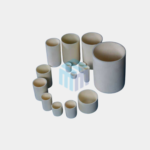


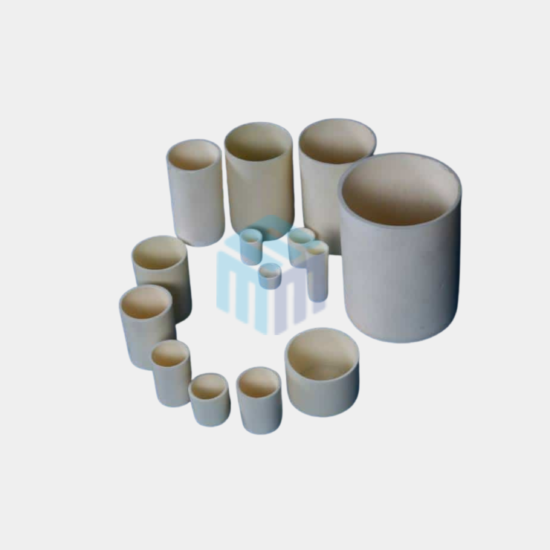
Alumina ceramics serve laboratory instruments, furnaces, electrical systems, chemical-processing equipment, and industrial machinery. Manufacturers use alumina ceramic products in specialized laboratory and industrial applications where they need thermal stability, electrical insulation, chemical resistance, and wear resistance that conventional metals or plastics may not provide.
For many applications, standard ceramic parts are not enough. Equipment manufacturers and laboratory engineers may require components with specific dimensions, hole patterns, wall thicknesses, surface finishes, or mechanical interfaces. This is where custom alumina parts and alumina ceramic components become valuable.
This guide explores custom alumina components, their applications, manufacturing processes, and the key factors to consider when selecting custom alumina ceramic parts and custom ceramic parts for laboratory or industrial equipment.
What Is Alumina Ceramic?
Alumina, chemically known as aluminum oxide (Al₂O₃), is an advanced technical ceramic that manufacturers use to produce a wide range of alumina ceramic products for structural and functional applications.It is available in different purity levels, with commonly used grades ranging from approximately 95% to high-purity alumina above 99%. The appropriate grade depends on the application’s temperature, chemical, electrical, wear, and contamination requirements.
Alumina offers high hardness, excellent electrical insulation, thermal stability, chemical resistance, and dimensional stability. Manufacturers use high-purity alumina grades in demanding laboratory, furnace, vacuum, electronics, and semiconductor applications.
Why Use Custom Alumina Components and Custom Alumina Products?
A standard ceramic component may not fit every equipment design. Custom alumina products allow manufacturers to develop components around the actual operating requirements of the system. Custom manufacturing enables manufacturers to design alumina ceramic components to meet the specific operating requirements of each system.
Manufacturers can produce custom alumina ceramic parts in various shapes and configurations, including:
- Tubes and sleeves
- Plates and discs
- Rods and pins
- Spacers and insulators
- Crucibles and trays
- Rings and washers
- Liners and wear components
- Nozzles and guides
- Feedthrough components
- Furnace components
- Precision-machined custom ceramic parts
Manufacturers may produce custom alumina products and alumina ceramic custom parts according to engineering drawings, CAD files, samples, or specified dimensions. Depending on the application, machining, grinding, polishing, or other finishing operations may be required.
Key Properties of Alumina Components
High Temperature Resistance
Laboratories and industries widely use alumina in high-temperature equipment. High-purity alumina components withstand furnace and thermal-processing environments where ordinary materials may soften, oxidize, or degrade.
The actual operating temperature depends on the alumina grade, mechanical loading, atmosphere, thermal cycling, geometry, and installation conditions. Therefore, users should evaluate the recommended continuous operating temperature separately from the material’s maximum temperature.
Electrical Insulation
Alumina provides excellent electrical insulation, making it suitable for insulators, spacers, substrates, feedthrough components, and other applications that require electrical isolation. High-purity alumina grades are particularly useful where electrical performance and dimensional stability are important.
Chemical Resistance
Alumina resists many chemicals, making it a popular choice for laboratory and industrial environments that handle corrosive or reactive materials. Users should verify chemical compatibility based on the specific process chemistry, operating temperature, chemical concentration, and exposure time.
Hardness and Wear Resistance
Alumina has high hardness and good wear resistance, making it suitable for applications involving friction, abrasion, or repeated mechanical contact. Industrial uses include wear parts, liners, pump-related components, guides, and precision mechanical elements.
Alumina Customization Applications
Common Laboratory Applications
Custom alumina components are particularly useful in laboratories where high temperatures, chemical stability, or contamination control are important.
Laboratory Furnaces
Laboratories and industries commonly use alumina tubes, plates, boats, crucibles, supports, and trays in laboratory furnaces and thermal-processing systems.
Materials Research
Research laboratories working with ceramics, metals, powders, battery materials, and other advanced materials may require custom trays, crucibles, sample holders, and furnace fixtures.
Chemical and Analytical Equipment
Alumina components can be incorporated into systems exposed to elevated temperatures and demanding chemical environments.
Vacuum and Research Equipment
High-purity alumina can also be used in vacuum-related equipment and laboratory assemblies where electrical insulation, thermal stability, and low contamination are important.
Industrial Applications
Electrical and Electronic Equipment
Alumina components can serve as electrical insulators, substrates, spacers, housings, and support components.
Semiconductor Equipment
Precision alumina components are used in insulating structures, support pins, rings, sleeves, guides, and other equipment components where thermal stability, electrical insulation, wear resistance, and contamination control are important.
Industrial Machinery
Wear-resistant alumina parts can be used in pumps, valves, bearings, liners, and other machinery where hardness and chemical resistance are required.
Furnace and Thermal Processing Equipment
Custom tubes, plates, supports, setters, spacers, and other ceramic fixtures can be designed for high-temperature processing systems.
Alumina Grades: Why Purity Matters
One of the most important decisions when specifying a custom alumina component is the material grade.
A lower-purity alumina may provide an economical solution for general industrial applications. Higher-purity alumina is generally selected when the application demands improved thermal, electrical, chemical, or contamination performance.
Manufacturers offer alumina grades around 95%, 99%, 99.5%, 99.7%, and higher. However, purity alone should not determine the selection. The complete application should be evaluated, including temperature, atmosphere, mechanical load, electrical requirements, chemical exposure, and required cleanliness.
For demanding applications, custom Al2O3 ceramic parts can be specified with the appropriate alumina purity and geometry to match the equipment requirements.
How Manufacturers Produce Custom Alumina Components
1. Design Review
The drawing or sample is reviewed for material selection, dimensions, tolerances, wall thickness, holes, grooves, and other functional features.
2. Forming
Ceramic powder is shaped using an appropriate forming method. Depending on the component, processes can include pressing, extrusion, casting, or other ceramic forming techniques.
3. Sintering
The formed component is fired at high temperature to develop the required ceramic structure and properties.
4. Precision Machining
Where tighter dimensional accuracy is required, grinding or other machining processes may be performed after sintering.
5. Inspection and Finishing
Critical dimensions, surface finish, flatness, holes, and other specified features are inspected before delivery.
Ceramic manufacturing differs significantly from conventional metal machining because sintering causes dimensional changes, while finished alumina is hard and brittle. Tight tolerances should therefore be specified only where they are functionally necessary.
Important Design Considerations
Geometry
Avoid unnecessarily thin sections, sharp internal corners, and features that create high stress concentrations wherever the application allows.
Tolerances
Specify tolerances according to actual functional requirements. Extremely tight tolerances can increase machining requirements, inspection time, and cost.
Thermal Conditions
Consider operating temperature, heating and cooling rates, thermal gradients, and thermal cycling.
Mechanical Loading
Alumina has excellent compressive strength but is brittle compared with metals. Impact, excessive clamping force, vibration, and sudden thermal changes can damage ceramic components.
Surface Finish
Sealing surfaces, sliding surfaces, optical interfaces, and precision mating areas may require grinding or polishing, while other surfaces may be acceptable in an as-fired condition.
Custom Alumina Parts and Custom Ceramic Parts vs. Standard Components
Standard alumina components can be suitable when the required dimensions and performance already match an existing design. Custom alumina parts become more useful when the equipment requires:
- Non-standard dimensions
- Special hole patterns
- Unusual shapes
- Specific material purity
- Tight dimensional tolerances
- Special surface finishes
- Prototype or low-volume production
- Replacement of an obsolete component
- OEM-specific geometry
A custom approach can also help equipment manufacturers integrate ceramic components directly into their assemblies rather than modifying the equipment around an off-the-shelf part.
How to Specify a Custom Alumina Component
When requesting a quotation for custom alumina ceramic components or custom alumina products, provide as much technical information as possible. Ideally, include:
- Engineering drawing or CAD file
- Alumina purity or material grade
- Dimensions and tolerances
- Quantity
- Operating temperature
- Working atmosphere
- Chemical exposure
- Electrical requirements, if applicable
- Surface finish requirements
- Flatness, parallelism, or concentricity requirements
- Packaging or cleanliness requirements
- Application details
Providing these details early helps the manufacturer evaluate manufacturability and select an appropriate production process.
Conclusion
Custom alumina components provide a practical solution when laboratory or industrial equipment requires a combination of high-temperature stability, electrical insulation, chemical resistance, hardness, wear resistance, and dimensional stability.
The most important part of specifying a custom component is matching the alumina grade and manufacturing process to the actual application. A clear drawing, realistic tolerances, operating conditions, and required inspection criteria can significantly improve the reliability of the final component.
For laboratories, equipment manufacturers, and industrial users, working with an experienced supplier can simplify material selection, design review, prototyping, and production of custom alumina ceramic parts.
M-Kube India supplies custom alumina parts, custom alumina products, alumina ceramic components, alumina ceramic products, and custom ceramic parts for laboratory, research, furnace, electrical, semiconductor, and industrial equipment applications.
Looking for Custom Alumina Components?
M-Kube India can support sourcing and supply requirements for technical ceramic components used in laboratory, research, and industrial equipment.
If you have a drawing, sample, specification, or existing component, share the details with our team for evaluation and quotation.
Phone: +91 9898892994
Email: marketing@mkubeenterprise.co.in