

In advanced materials science, achieving precise temperature control is vital to studying and developing gradient materials—materials whose composition or structure gradually changes across a specific dimension. A multi-zone tube furnace allows such precision by providing independently controlled temperature zones along the heating chamber. This design ensures accurate thermal gradients, uniformity, and reproducibility—key factors in the synthesis and analysis of modern materials.
Understanding the Importance of Tube Furnaces in Materials Research
Tube furnaces are widely used in laboratories for heat treatment, calcination, sintering, and crystal growth experiments. Unlike traditional furnaces, a tube furnace features a cylindrical heating chamber that supports consistent heating in an inert or controlled atmosphere.
In gradient material research, where temperature variation directly influences diffusion and phase formation, a multi-zone laboratory tube furnace offers unparalleled control and flexibility, making it indispensable for precise scientific studies.
1. What Makes Multi-Zone Tube Furnaces Unique
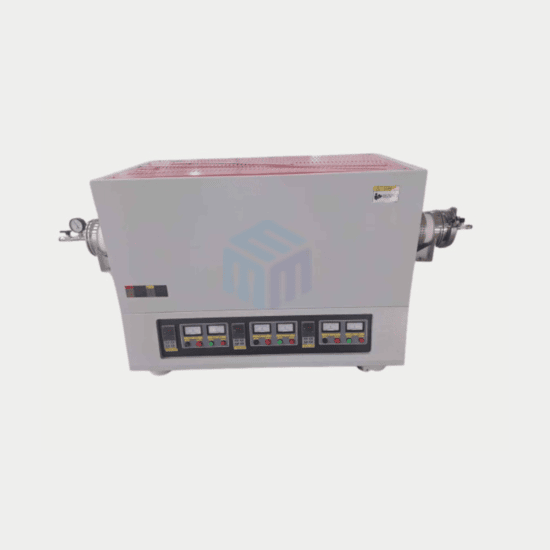
A multi-zone tube furnace consists of two or more independently controlled heating zones along the length of the furnace tube. Each zone can be set at different temperatures, enabling the creation of smooth or step-wise thermal gradients.
Key benefits include:
- Enhanced control of temperature profiles.
- Capability to simulate real-world thermal conditions.
- Consistent heating for complex material synthesis.
Such flexibility allows researchers to manipulate temperature-dependent reactions, diffusion processes, and microstructural evolution in ways not possible with single-zone systems.
2. Applications of Multi-Zone Tube Furnaces in Gradient Materials Research
Gradient materials—such as functionally graded ceramics, alloys, and composites—require carefully controlled temperature environments for development and testing. A high temperature tube furnace plays a crucial role in experiments that involve:
- Sintering functionally graded ceramics: Controlled temperature gradients promote gradual compositional transitions.
- Thermal diffusion studies: Understanding element diffusion across temperature differences.
- Phase transformation experiments: Observing how varying temperatures influence crystal structure formation.
- Coating and deposition research: Enabling precise control over reaction zones in vapor or gas-phase synthesis.
These applications make the lab tube furnace a cornerstone instrument in advanced research labs across India and worldwide.
3. Temperature Uniformity and Precision Control
Accurate temperature management is critical for reproducibility in scientific experiments. Multi-zone furnaces provide overlapping heating zones that ensure smooth transitions between temperature regions, eliminating cold spots or sudden variations.
Advanced models of laboratory tube furnaces include PID (Proportional-Integral-Derivative) controllers, programmable temperature ramps, and real-time feedback sensors. These features help maintain desired gradients, improving experiment accuracy and repeatability in high-precision material synthesis.
4. Designing Experiments with Gradient Profiles
Researchers often design experiments that simulate real thermal environments—such as geological gradients, diffusion layers, or thermal stress simulations. Multi-zone furnaces allow the adjustment of heating profiles to reproduce these gradients accurately.
Example: When studying metal-ceramic composites, a tube furnace with three zones can maintain temperatures of 1000°C, 1200°C, and 1400°C across different regions, creating a smooth gradient for observing diffusion or structural changes.
This level of control makes multi-zone furnaces invaluable for materials development, semiconductor research, and thin-film coating studies.
5. Evaluating Tube Furnace Price and Features
When assessing the tube furnace price, several factors influence cost—number of heating zones, maximum operating temperature, chamber dimensions, and automation level. While multi-zone furnaces are more expensive than single-zone models, they provide greater flexibility and value for long-term research.
Key factors affecting price:
- Maximum temperature capacity (up to 1800°C for some models).
- Number of independent zones (two, three, or more).
- Quality of insulation and temperature uniformity.
- Additional features like vacuum sealing, gas flow systems, and digital controllers.
Investing in a high-quality tube furnace in India ensures durability, precise results, and lower maintenance costs over time.
Choosing the Right Tube Furnace for Your Laboratory
Selecting the ideal laboratory tube furnace depends on experimental requirements, temperature range, and sample size. Researchers should consider:
- The type of materials being tested.
- The required thermal gradient or uniformity.
- Atmosphere control (air, vacuum, or inert gas).
- Automation and data logging capabilities.
Partnering with a trusted tube furnace supplier in India ensures proper guidance, installation, and after-sales support, which are crucial for high-end research setups.
Why Choose M-Kube for Tube Furnaces in India
M-Kube is one of the reliable suppliers of tube furnaces in India, offering a comprehensive range of single-zone, dual-zone, and multi-zone models for laboratory and research use. Each furnace is designed with precision temperature control and superior insulation to ensure long-term reliability.
High Temperature Capability: Models available up to 1800°C for advanced materials research.
Multi-Zone Configurations: Independent zone control for creating accurate temperature gradients.
Reliable Performance: Ensures consistent heating, energy efficiency, and user safety.
Custom Solutions: Designed to meet specific laboratory applications.
Looking for a reliable lab tube furnace for your research applications?
Contact +91 9898892994 or email marketing@mkubeenterprise.co.in to get expert assistance and a quote today.
Conclusion
In gradient materials research, precision temperature control determines the accuracy and success of experiments. A multi-zone tube furnace provides the flexibility to create stable, programmable thermal environments essential for studying material diffusion, transformation, and synthesis.
By partnering with trusted suppliers like M-Kube, researchers in India can access reliable, high-performance tube furnaces that meet the demanding requirements of modern laboratories. Investing in a quality high temperature tube furnace not only enhances research outcomes but also contributes to long-term cost efficiency and innovation in material science.