

In battery research, achieving accuracy and repeatability is critical for reliable results. Researchers widely use coin cells, also called button cells, for laboratory-scale testing of new electrode materials and electrolytes. Even advanced materials can give misleading data if coin cell preparation is not done correctly. Every step—from precise electrode cutting and weighing to careful electrolyte filling and secure sealing—directly affects the cell’s performance, stability, and lifespan. Proper coin cell preparation ensures reproducible results and meaningful insights into material behavior.
What Is Coin Cell Preparation? An Overview
Coin cell preparation is the process of assembling small, disk-shaped batteries for research and testing purposes. These cells are commonly used in academic, industrial, and R&D labs to evaluate:
- New cathode and anode materials
- Electrolyte formulations
- Separator performance
- Cycle life and capacity retention
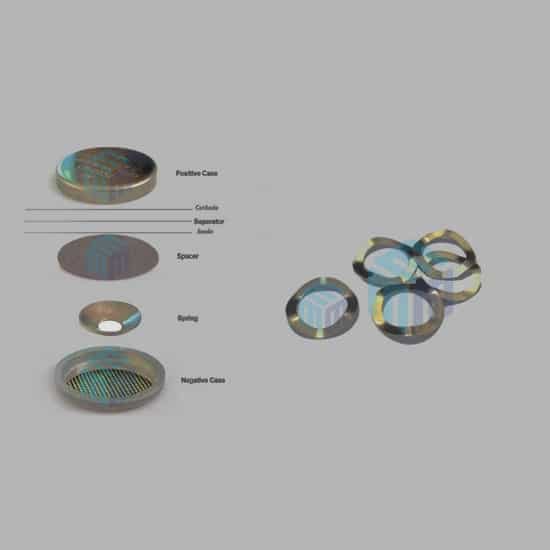
A typical coin cell consists of coin cell components such as the cathode cap, anode cap, spacer, spring, gasket, and separator, assembled in a controlled environment—often inside a glove box to prevent moisture and oxygen contamination.
Precision and Repeatability: Key to Reliable Research Outcomes
In coin battery research, precision and repeatability play a vital role in obtaining accurate and reliable data. Even minor inconsistencies during coin cell preparation—such as uneven electrode coating or variations in applied pressure—can affect electrochemical performance. Using a standardized assembly process helps ensure consistent and reproducible results, which are essential for advancing next-generation battery materials. Ultimately, the quality of battery performance data depends on the preparation process, and precise assembly ensures that observed differences come from material performance rather than assembly errors.
- Repeatable Assembly – Using standardized tools and procedures ensures comparable results across multiple cells.
- Accurate Measurements – Proper electrode cutting, electrolyte dispensing, and pressure control are essential for consistency.
- Environmental Control – Moisture and oxygen must be minimized to prevent side reactions that degrade performance.
Common Errors in Coin Cell Preparation That Affect Results
Improper electrode drying, contamination, and incorrect electrolyte filling are common issues that impact coin cell parts performance. Neglecting glove box humidity or sealing pressure can lead to unstable readings and premature cell failure. Addressing these errors through careful coin cell preparation helps achieve consistent, trustworthy experimental outcomes in battery testing.
Even small mistakes can lead to inaccurate results in battery research:
- Improper Electrode Size – Oversized or undersized electrodes can cause short circuits or poor contact.
- Contamination – Dust, oils, or moisture can alter electrochemical behavior.
- Incorrect Electrolyte Volume – Too little electrolyte increases internal resistance; too much can cause leakage.
- Misaligned Components – Poor alignment of spacers, springs, or gaskets can affect cell sealing and pressure.
- Inconsistent Crimping – Uneven sealing pressure can result in leakage or cell failure.
Tools and Best Practices for Accurate Coin Cell Assembly
Using the right tools and techniques is vital for accurate coin cell assembly. High-quality crimping machines, precision spacers, and cleanroom handling reduce assembly errors. Researchers engaged in coin battery research should maintain uniform pressure, correct electrolyte volume, and controlled environment conditions to ensure consistent cell performance and reproducibility.
To achieve consistent and accurate results, laboratories should follow these best practices:
- Use Precision Coin Cell Assembly Tools – Crimpers, electrode cutters, and electrolyte dispensers designed for button cells improve accuracy.
- Assemble in an Inert Atmosphere – Use a glove box with argon or nitrogen to prevent contamination.
- Inspect All Coin Cell Parts Before Assembly – Check spacers, gaskets, and caps for defects.
- Maintain Clean Workspaces – Minimize dust and foreign particles during assembly.
- Document the Process – Keep detailed records of materials, assembly sequence, and environmental conditions.
How Electrode Materials and Components Influence Performance
The type and quality of coin cell components—including electrodes, separators, and electrolytes—directly affect battery performance. Variations in material purity, particle size, or electrode thickness can significantly influence capacity, cycle life, and internal resistance. Meticulous selection and handling of coin cell parts ensure accurate, comparable research data across multiple experiments.
The choice of coin cell components directly impacts battery performance:
- Cathode and Anode Materials – Determine energy density, cycle life, and rate capability.
- Separator – Affects ionic conductivity and prevents short circuits.
- Electrolyte – Controls ion transport and overall stability.
- Spacer and Spring – Maintain consistent pressure for stable contact between electrodes.
High-quality coin cell parts ensure that the research results accurately reflect the potential of the materials being tested.
Conclusion
Successful coin cell preparation is the foundation of credible battery research. Precision, repeatability, and the use of high-quality coin cell components help researchers generate accurate and reproducible results. Whether you are testing new electrode formulations or evaluating electrolyte performance, proper button cell assembly ensures that your data is trustworthy.
Get the right tools and components for your coin cell assembly from M-Kube Enterprise.
📞 Call: +91-9898892994
📧 Email: marketing@mkubeenterprise.co.in
for premium-quality coin cell parts and assembly equipment.