

In high-temperature industrial environments — such as furnaces, metallurgical processes, vacuum systems, or chemical reactors — thermal shock and reactive contact can severely limit component life. Conventional ceramics like alumina (Al₂O₃) or silicon nitride may crack under rapid heating/cooling, or react with molten metals and corrosive agents.
That’s where boron nitride (BN) comes into play. With its exceptional thermal, chemical, and mechanical stability, boron nitride components provide a robust solution — especially when you need custom parts like blocks, blanks, sleeves, or insulators. In this post, we explore the benefits of BN, when to make the switch, how to design custom BN parts, and critical considerations.
What Makes Boron Nitride (BN) Special in High-Temperature Applications
Here are the key properties of boron nitride that help address thermal and reaction issues:
- Exceptional Thermal Shock Resistance: BN has a low coefficient of thermal expansion and relatively high thermal conductivity. This helps it absorb rapid temperature changes without cracking.
- High Operating Temperature: Depending on grade, BN can operate up to ~2100 °C in inert atmospheres.
- Excellent Chemical Inertness: BN resists corrosion from acids, molten metals, slags, and salts.
- Electrical Insulation: It maintains very high volume resistivity even at elevated temperatures.
- Machinability: Hexagonal BN is relatively soft compared to many ceramics, so custom shapes, tight tolerances, and precision parts are possible.
- Low Density: BN’s density is lower than many other technical ceramics (around 1.6–>2 g/cm³).
- Lubricious / Non-Wetting: BN is non-wetting to many molten metals, making it great for crucibles, nozzles, and furnace components.
When to Switch from Alumina (or Other Ceramics) to Boron Nitride Custom Parts
Here are practical scenarios where you should strongly consider switching to BN:
-
Thermal Shock Failures
-
-
- If your alumina parts keep cracking during rapid heating or cooling cycles, BN’s superior thermal shock resistance can significantly improve lifetime.
- For applications like furnace components, heater supports, or thermowells with frequent thermal cycling, BN often outlasts alumina. HeBoSint® BN components are specifically designed for “excellent thermal cycling resistance.”
-
-
Reactive Contact with Molten Metals or Corrosives
-
-
- When parts are in contact with molten metals (e.g., casting, metallurgy), alumina can sometimes be wetted or eroded. BN offers strong non-wetting behavior, which prevents adhesion and chemical attack.
- In slag, salt, or highly corrosive chemical environments, BN’s chemical stability makes it a more reliable choice.
-
-
High-Temperature Insulation with Electrical Requirements
-
-
- If you need insulation at very high temperatures but also need to maintain electrical properties, BN is a strong candidate (insulating, but thermally stable).
- This is useful for vacuum furnaces, plasma devices, PVD systems, or electronic high-temperature fixtures.
-
-
Custom or Precision Parts
-
-
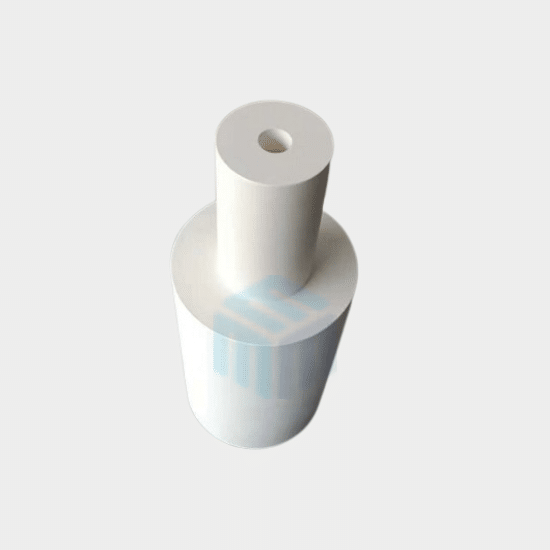
- When off-the-shelf ceramic shapes don’t meet your needs, BN can be custom-machined into blanks, blocks, rods, plates, or other complex parts.
- Its machinability allows BN to achieve tight tolerances and complex geometries.
-
-
Low Weight with High Performance
-
- If weight is a factor in aerospace, high-vacuum systems, or precision tooling, BN’s low density provides a performance advantage over denser ceramics.
Trade-offs and Challenges to Be Mindful Of
Switching to BN is not without cost or complexity. Here are some trade-offs and considerations when deciding:
- Higher Material Cost: BN, especially high-purity or hot-pressed BN, is more expensive than standard alumina.
- Machining Cost: Though machinable, precision BN parts require skilled machining, which can increase lead times.
- Oxidation Limits in Air: Some BN grades oxidize in air above certain temperatures, so if your process involves air atmospheres, be careful.
- Grade Selection: Different BN grades (high-purity BN, composite BN, BN + ZrO₂, etc.) have different performance profiles. Choosing the wrong grade may reduce benefits.
- Thermal Conductivity Anisotropy: Depending on how BN is pressed, thermal conductivity may vary in different directions.
How to Design & Source Boron Nitride Custom Parts
Here is a practical guide for how to move from concept to procurement:
-
Define Your Requirements
-
-
- List operating temperature, atmosphere (air, vacuum, inert), thermal cycling profile, chemical contact, and mechanical stresses.
- Specify electrical insulation requirements, if any.
- Decide the shape and tolerances: block, tube, rod, crucible, etc.
-
-
Choose the Right BN Grade
-
-
- Ultra-high purity BN (e.g., Grade AX05) for corrosion resistance, non-wetting, very clean environments.
- Composite BN (e.g., ZSBN): includes zirconia or other phases to improve strength.
- Custom pressed BN: for shapes where mechanical strength + shock resistance matter. HeBoSint® is one such solution.
- PCBN (Precision ceramics): for thermal shock and precise insulators.
-
-
Prototype / Pilot
-
-
- Request a small batch of BN blanks or blocks for prototyping.
- Test under your cycle: heat up, cool down, test chemical interaction, measure wear or degradation.
-
-
Manufacturing & Machining
-
-
- Work with a ceramics partner or supplier experienced in BN. Provide CAD drawings for blanks or final parts.
- Make sure they support tight tolerances, surface finish, and the grade you need.
-
-
Quality Inspection & Validation
-
-
- Require relevant material data: density, thermal expansion, porosity, purity, dielectric strength.
- Run performance validation in your system to make sure parts last and behave as expected.
-
-
Total Cost Analysis
-
- Compare material + machining cost against expected lifetime, maintenance downtime saved, and performance improvement.
- Often, savings come from increased thermal-cycle life, reduced replacement, and more stable operation.
Real-World Use Cases & Benefits
- Furnace Components: BN parts used in furnace tubes, liners or shelf supports can dramatically reduce breakdowns due to repeated heating/cooling.
- Molten Metal Processing: In casting or metallurgy, BN crucibles / nozzles resist sticking and reaction with molten metals, especially non-wetting with many metals.
- Semiconductor / Vacuum Systems: BN insulators or supports can work reliably in high-vacuum, high-temperature, high-voltage environments, thanks to BN’s electrical insulation and thermal stability.
- Research & High-End Applications: BN custom parts are used in plasma devices, aerospace, and advanced material processing where standard ceramics fail due to shock or reaction.
Conclusion
If you’re facing thermal shock fractures, reactive failures, or short component life due to extreme thermal cycling or corrosive heating environments, switching to custom boron nitride parts is a smart engineering choice. BN offers low thermal expansion, high thermal conductivity, chemical inertness, and excellent machinability, making it well suited for high-stress applications. Selecting the right BN grade and a design tailored to your requirements can extend component life, reduce maintenance, and improve overall process reliability.
M-Kube Enterprise can help you evaluate your needs, pick the right BN grade, design custom parts, and source precision-manufactured BN components that match your performance and budget goals.
If thermal shock, sticking, or unwanted reactions are impacting your process efficiency, it’s time to upgrade your components.
📞 Call us today at +91-9898892994 or
📧 Email us at marketing@mkubeenterprise.co.in
to discuss your requirements, request a quote, or get guidance on selecting the right BN grade for your furnace or material-processing setup.