

Titanium is a remarkable material — lightweight, strong, and highly corrosion resistant. But not all titanium is the same. When choosing titanium sheets, plates, or foil for your application, the grade matters a lot. At M-Kube, we offer a wide range of grades — including Grades 1, 2, 5, 7, 9, 11, and 12 — so you can pick the right one for strength, formability, price, and environmental resistance.
In this blog, we’ll walk you through how to choose the right titanium grade, what the trade-offs are, and how different grades perform in different use cases. We’ll also explain titanium sheets / plate / foil options, and how to balance titanium sheet price, performance, and supplier credibility.
Why Titanium Grade Matters
Titanium’s performance is strongly influenced by its grade:
- Strength: Alloyed grades like Grade 5 are much stronger; pure grades (Grade 1–4) are softer.
- Corrosion Resistance: Commercially pure grades (like Grade 2) resist corrosion very well in aggressive environments.
- Formability & Weldability: Lower-strength grades are easier to form, weld, or shape.
- Thermal & Electrical Properties: Different grades conduct heat or electricity differently.
- Cost: Alloyed grades cost more because of added elements (like Al and V) and more complex processing.
How to Choose the Right Grade for Your Project
Here are some guiding factors to help you decide:
-
Load & Strength Requirements
-
-
- If your application needs very high strength, go for Grade 5.
- If strength is moderate, but formability or corrosion resistance is important, Grade 2 is often ideal.
-
-
Corrosive Environment
-
-
- For aggressive chemical or marine environments, CP grades (1 or 2) shine due to their passive oxide layer.
- For reducing acids or very specific chemistry, Grade 7 might be more suitable.
-
-
Fabrication Considerations
-
-
- Formability: CP grades are easier to bend, roll, or draw.
- Welding: Grade 5 needs careful shielding and post-weld treatment.
- Machining: Alloyed grades can be tougher; Grade 2 is easier to machine but work-hardens.
-
-
Thermal / Electrical Needs
-
-
- If thermal conductivity matters (e.g., heat exchangers), note that CP grades generally conduct better.
- For applications needing low electrical conductivity, some alloys may perform differently.
-
-
Cost & Availability
-
-
- Pure grades (1, 2) are generally cheaper than alloyed ones.
- Grade 5 or 9 will cost more but bring performance benefits.
-
-
Regulatory or Biomedical Needs
-
- For implants or medical devices, alloy grades like Grade 5 (or ELI variants) are common because of their strength and biocompatibility.
- For food or chemical contact, CP grades might be preferred.
Titanium Sheet, Plate & Foil: What to Know
When buying titanium for your project, you also need to decide the form:
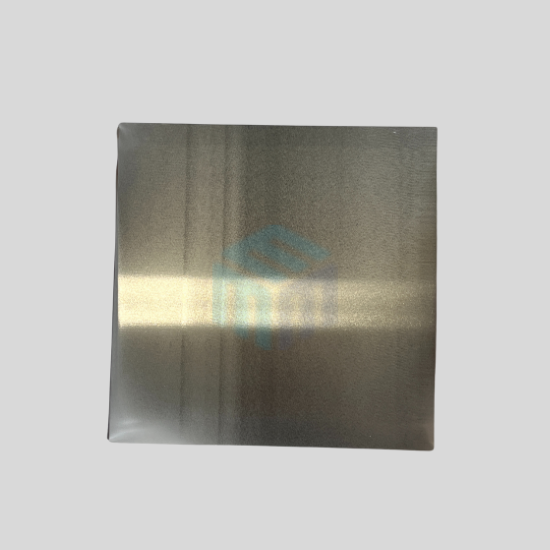
- Titanium Sheets: Thin, flat pieces – ideal for cladding, covers, chemical vessels.
- Titanium Plates: Thicker material for structural applications, heavy components.
- Titanium Foil / Foil Sheet: Very thin, flexible, specialty engineering.
At M-Kube, depending on grade, we can offer sheet, plate, and foil options. Each form affects titanium sheet price, plate price, and foil price, because manufacturing, alloying, and finishing costs differ.
Where to Source Titanium (Suppliers & Price Factors)
If your application also involves structural components, fluid handling, or pressure systems, pairing titanium sheets with precision-engineered titanium tubes can help maintain material consistency and performance. Many industries prefer sourcing both from the same supplier to ensure consistent grade, finish, and certification traceability.
Certifications: Ask for mill test certificates (MTC) to verify grade and chemical composition.
- Supplier Reputation: Choose suppliers that specialize in titanium or specialty metals — this ensures quality and traceability.
- Minimum Order Quantities (MOQs): Titanium has manufacturing overhead, so smaller orders may cost more per kg.
- Finish & Surface Quality: If your application demands a polished, pickled, or high-grade surface , price will vary.
- Logistics: For Indian customers, also assess import duty, shipping, and local availability.
Here are a few example titanium products to give a sense of what’s available:
- Pure Titanium Sheet (CP) — a commercially pure titanium sheet, suitable for corrosion-resistant applications.
- 2 mm Titanium Grade 5 Sheet — high-strength Ti-6Al-4V, ideal for structural
- UNS R56401 Grade V Titanium Sheet — premium Grade 5 sheet, certified.
- Titanium Sheet Grade 5 — a more generic grade-5 sheet from another supplier.
- Titanium Plate / Sheet — a thicker variant, useful for plate applications.
Pros & Trade-offs: Grade Comparison
Here is a simple pros/trade-offs list for choosing among common titanium grades (especially the ones M-Kube offers):
-
Grade 2
-
-
- Pros: Excellent corrosion resistance, good formability, relatively lower cost.
- Trade-offs: Lower strength, less fatigue resistance.
-
-
Grade 5
-
-
- Pros: Very high strength, good fatigue resistance, well-known in medical.
- Trade-offs: More expensive, harder to weld, more difficult to machine.
-
-
Grade 9
-
-
- Pros: Better formability than Grade 5, decent strength, good weldability. Trade-offs: Not as strong as Grade 5; cost and availability may vary.
-
-
Grade 7
-
-
- Pros: Exceptional resistance to reducing acids, good for chemical / marine.
- Trade-offs: Slightly more specialized, may cost more due to palladium or alloying.
-
-
Grades 11 / 12
-
- Pros: Tailored for niche use-cases; can balance corrosion + strength.
- Trade-offs: Less common; pricing and lead time may be higher.
Looking for high-performance titanium sheets, plates, or foils?
📞 Call us today at +91-9898892994 or 📧 Email us at marketing@mkubeenterprise.co.in
Let our material experts help you choose the correct grade for your exact application.
Conclusion
Choosing the right titanium sheet grade is not just about picking the “strongest” or the “cheapest.” It’s about matching the material’s properties (strength, corrosion resistance, formability) to your actual use case.
- If corrosion resistance and easy forming matter more: go for Grade 2.
- If high strength / fatigue resistance is critical: Grade 5 might be ideal.
- For specialized chemical environments, Grade 7 or other grades may make sense.
- If you need a balance between formability and alloy strength: Grade 9 is a strong contender.
References:
1. Titanium Grade 2 Vs Grade 5: Key Differences & Applications
2. Titanium Grade 5 vs Grade 2 Comparison
3. Titanium Grade 2 Vs Grade 5: Key Differences & Applications
3. Grade 2 Titanium: Composition, Properties & Applications.