

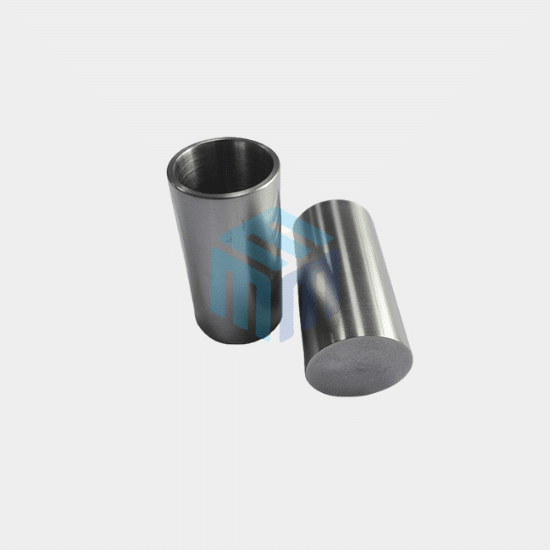
Molybdenum crucibles offer several features and advantages that make them suitable for high-temperature applications in industries such as metallurgy, electronics, and research laboratories. Here are the key features and advantages of molybdenum crucibles:
Features and Applications of Molybdenum Crucibles
Molybdenum crucibles are essential components in industries that rely on ultra-high temperatures, precision, and purity. As a refractory metal, molybdenum offers exceptional thermal and chemical stability, making these crucibles ideal for demanding manufacturing environments.
-
High Melting Point:
Molybdenum has a high melting point of approximately 2620°C (4748°F), making molybdenum crucibles capable of withstanding extremely high temperatures required for melting refractory metals, ceramics, and alloys.
-
Chemical Resistance:
Molybdenum is resistant to corrosion by many acids, alkalis, and molten metals—including lead, gallium, lithium, and sodium—making the cylindrical molybdenum crucible and other molybdenum crucibles ideal for handling corrosive materials and reactive substances in industrial processes
-
Thermal Conductivity:
Molybdenum has good thermal conductivity, allowing for efficient heat transfer within the crucible. This property is beneficial for uniform heating and temperature distribution during high-temperature processes such as melting and annealing.
-
Low Thermal Expansion:
Molybdenum has a relatively low coefficient of thermal expansion, which means molybdenum crucibles experience minimal dimensional changes with temperature variations. This property helps reduce the risk of thermal stress-induced cracking.
-
High Strength and Durability:
They exhibit high strength and durability, enabling them to withstand mechanical stress, thermal cycling, and rapid temperature changes without deformation or failure. This characteristic contributes to their long service life.
-
Refractory Properties:
Molybdenum is classified as a refractory metal, along with tungsten, due to its ability to withstand high temperatures without softening or melting. Molybdenum crucibles are therefore used in high-temperature applications such as vacuum furnaces and plasma processes.
-
Compatibility with Vacuum Environments:
Molybdenum is compatible with high vacuum environments, making molybdenum crucibles suitable for processes that require vacuum or inert gas atmospheres, such as thin-film deposition, sintering, and heat treatment.
-
Ease of Machining:
Molybdenum is relatively easy to machine and shape, allowing for the production of customized crucible designs to meet specific application requirements.
-
Versatility:
They find applications in a wide range of industries, electronics, metallurgy, and research laboratories, where high-temperature resistance, chemical inertness, and thermal stability are essential.
Overall, the features and advantages of molybdenum crucibles make them a valuable choice for demanding applications that involve high temperatures, corrosive environments, and stringent performance requirements.
Also Read: Uses & Benefits of Molybdenum Crucibles
Conclusion:
They stand out for their elite combination of thermal resistance, structural strength, chemical inertness, and vacuum compatibility—essential for top-tier industrial and research-grade applications. While their molybdenum crucible price may be higher upfront, their long-term resilience, purity retention, and precision capabilities justify the investment. Perfect for metallurgy, semiconductor fabrication, crystal growth, and advanced analytical labs, Mo crucibles are a smart choice for demanding environments.
M-Kube Enterprise is an Indian company catering customized laboratory products, laboratory consumables, and laboratory solutions in India, Australia, New Zealand, Singapore, Malaysia, South Korea, the USA, Dubai, the Philippines, Indonesia, and Vietnam.
Need Reliable Molybdenum Crucibles?
We supply high-quality refractory metal molybdenum crucibles suitable for a wide range of high-temperature industrial processes. Whether you need standard sizes or custom-engineered solutions, we deliver quality and precision backed by industry expertise.