

Tungsten rods, bars, and tubes are among the most critical consumables in advanced scientific labs, especially those working in materials science, high-temperature research, vacuum systems, and radiation physics. With a melting point of 3,422 °C, one of the highest among all metals, tungsten offers an unmatched combination of thermal stability, hardness, density, and chemical inertness. In many experiments, failure of support materials or electrodes due to heat or chemical attack can compromise not only accurate results but also safety. Thus, choosing the right tungsten consumables ensures high‐precision performance, durability, and reliability. This article explores why tungsten is so special, its key properties, how rods, bars, and tubes are used in lab settings, and what to consider when selecting them. Whether you’re sourcing tungsten rod bars in India or designing components for extreme conditions, understanding these factors will help you get consistent results and long service life.
Why Tungsten? Understanding Its Unique Properties
Tungsten stands out in industrial and laboratory use for its exceptionally high melting point (≈3,422 °C), making Tungsten Rods and Tungsten Bar stable in furnaces, plasma arcs, and extreme heat. Its high density (≈19.3 g/cm³) provides advantages for radiation shielding, counterweights, and thermal mass. With low vapor pressure, it performs well in vacuum systems, while good thermal and electrical conductivity make it valuable in electrodes, filaments, and heating elements. Chemically stable and strong, tungsten is vital in critical applications.
Key properties include:
- High Melting Point – Ideal for high-temperature furnaces and heating elements.
- High Density & Strength – Durable under mechanical stress.
- Low Vapor Pressure – Essential for vacuum environments.
- Chemical Resistance – Inert to most acids and gases.
- Good Electrical Conductivity – Makes it suitable for cathodes and filaments.
These qualities explain why tungsten metal bars and rods are a top choice in materials science, metallurgy, electronics, and thermal testing laboratories.
Applications of Tungsten Rods in Laboratory Experiments
Tungsten rods are used in plasma research as electrodes, handling high currents and heat without melting. They serve as targets in X-ray and radiation experiments due to their density and heat resistance. In furnaces, tungsten rods provide stability for supports, spacers, or heating elements near 2000 °C. Their low vapor pressure suits vacuum systems, preventing contamination. They are vital in electron microscopy, accelerators and other extreme-condition applications. Tungsten rods are precision-machined cylindrical components used in various laboratory settings. Common uses include:
- Electrodes in plasma research
- Target materials in X-ray and radiation experiments
- Support rods in high-temperature furnaces
- Filaments and thermocouples in vacuum chambers
- Anode materials in particle accelerators
When you buy tungsten rod, you’re investing in a long-lasting and stable lab component. Labs dealing with microelectronics and advanced ceramics often rely on tungsten for its unmatched performance.
Role of Tungsten Bars in Scientific Research
Tungsten bars are rectangular or square-shaped consumables used where structural rigidity and high-temperature endurance are critical. Their applications span:
- Heat shields in vacuum furnaces
- Radiation shielding in nuclear and X-ray facilities
- Counterweights in precision instruments
- Mold material for sintering experiments
- High-energy experiments requiring thermal and magnetic stability
Tungsten’s superior machinability in its pure form makes it suitable for custom-shaped bars that meet niche scientific requirements.
If you’re searching for tungsten bar suppliers in India, choose those offering high-purity grades with customizable dimensions.
Overview of Tungsten Tubes and Their Lab Applications
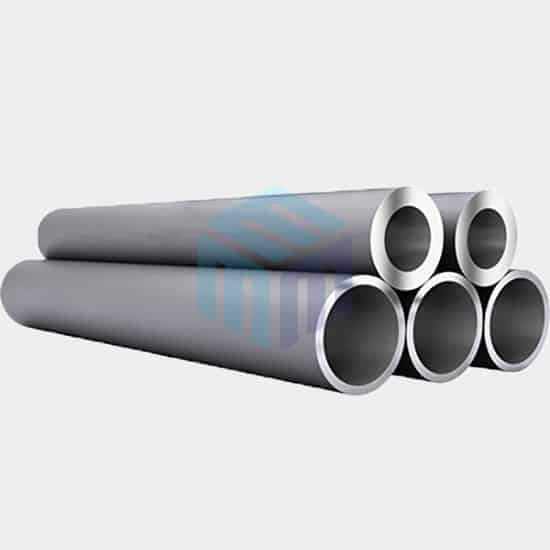
Tungsten tubes are hollow cylindrical parts used where a passage, sleeve, or enclosure is needed instead of solid bars or rods. They serve as protective sleeves for thermocouples or sensors in harsh, high-temperature environments, ensure stable flow in gas systems, and act as conduits in plasma discharge or arc experiments. In vacuum or high-pressure research, tungsten tubes provide strength and heat resistance. Though costly to fabricate, their unmatched durability makes them vital in extreme conditions. Tungsten tubes are hollow cylindrical structures used in specialized lab applications such as:
- Gas distribution systems in inert atmospheres
- Protective sleeves for thermocouples
- Components in plasma arcs and discharge systems
- Target holders in particle physics labs
Given the complexity of their fabrication, working with a trusted tungsten tube supplier ensures you receive precision-crafted tubes with uniform wall thickness and high dimensional accuracy.
Want to know the current tungsten tube price or get a custom quote? Reach out to us at M-Kube for competitive rates and technical support.
Selecting the Right Tungsten Consumables
Choosing the right tungsten rods, bars, and tubes for your laboratory needs depends on a few key factors:
| Selection Criteria | Description |
|---|---|
| Purity Level | >99.95% pure tungsten is recommended for most research applications |
| Dimensions | Ensure the correct length, diameter, or width based on your setup |
| Surface Finish | Polished, ground, or as-sintered finishes affect performance |
| Thermal Tolerance | Match operating temperatures to tungsten’s working limits |
| Supplier Reliability | Work with established tungsten rod and bar suppliers for consistency |
Conclusion
In high-precision laboratory environments, tungsten rods, bars, and tubes are more than just materials — they’re critical performance enablers. Their unmatched physical and thermal properties make them ideal for cutting-edge experiments and industrial testing environments.
Whether you’re conducting high-voltage research, building vacuum furnace systems, or shielding radiation, choosing high-quality tungsten consumables from a reliable source is essential.
🔍 Looking to Buy Tungsten Rods, Bars, or Tubes in India?
At M-Kube, we supply a wide range of pure tungsten rods, tungsten metal bars, and tungsten tubes tailored to scientific and industrial use. We ensure consistent quality, competitive tungsten tube price, and technical support for your lab requirements.
👉 Explore Tungsten Products
📞 +91-9898892994
📧 marketing@mkubeenterprise.co.in