

Chemical Vapor Deposition (CVD) and Plasma Enhanced Chemical Vapor Deposition (PECVD) are critical processes used in semiconductor manufacturing, advanced materials research, nanotechnology, photovoltaics, and thin-film coating applications. These high-temperature processes require materials that can withstand extreme thermal conditions while maintaining purity and chemical stability.
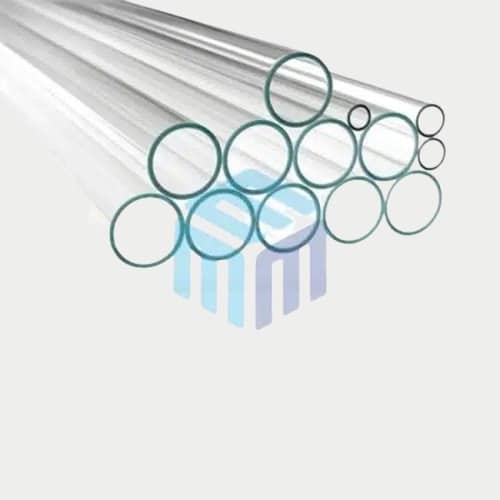
Among the most important components in these systems are quartz tubes, which serve as reaction chambers and process vessels during deposition operations. Due to their exceptional thermal resistance, chemical inertness, and high purity, fused quartz tubes, quartz glass tubes, and fused silica tubes have become the preferred choice for CVD and PECVD systems worldwide.
Why Quartz Is Preferred in CVD and PECVD Systems
CVD and PECVD processes require materials that do not contaminate sensitive substrates or react with process gases.
Quartz offers several advantages:
- High purity
- Excellent thermal stability
- Low thermal expansion
- Chemical resistance
- High transparency
- Excellent electrical insulation
These characteristics make fused quartz tubes and quartz glass tubes ideal for deposition processes where precision and cleanliness are critical.
Understanding CVD and PECVD Processes
Chemical Vapor Deposition (CVD)
CVD is a process where gaseous precursors react at elevated temperatures to form thin solid films on a substrate surface.
Applications include:
- Semiconductor devices
- Solar cells
- Optical coatings
- Nanomaterials
- Advanced ceramics
Since temperatures can exceed 1000°C, a reliable high temperature quartz tube is essential.
Plasma Enhanced Chemical Vapor Deposition (PECVD)
PECVD uses plasma energy to enhance chemical reactions at lower temperatures.
This process is commonly used for:
- Silicon nitride deposition
- Silicon dioxide coatings
- Thin-film electronics
- Photovoltaic applications
- Advanced research
Quartz components help maintain process purity and plasma stability throughout deposition cycles.
Key Roles of Quartz Tubes in CVD and PECVD Systems
1. High-Temperature Process Chamber
One of the primary functions of a quartz tube furnace is to provide a stable reaction chamber for deposition processes.
Quartz tubes can withstand:
- Rapid temperature changes
- Continuous high-temperature operation
- Reactive gas environments
This makes them suitable for demanding thermal processing applications.
2. Maintaining Process Purity
Semiconductor and thin-film manufacturing require extremely clean processing environments.
A fused silica tube provides:
- Minimal contamination risk
- Low impurity levels
- Excellent chemical inertness
This helps maintain the quality of deposited films and prevents unwanted reactions.
3. Uniform Heat Distribution
Consistent temperature profiles are critical for achieving uniform coatings and reproducible results.
Quartz tubes offer:
- Excellent thermal stability
- Uniform heat transfer
- Consistent process conditions
This improves coating quality and overall process efficiency.
4. Resistance to Chemical Attack
Many CVD and PECVD processes involve reactive gases such as:
- Hydrogen
- Nitrogen
- Oxygen
- Silane
- Ammonia
A quartz glass tube can resist attack from many processing environments while maintaining structural integrity.
5. Optical Transparency
Quartz is highly transparent to infrared and visible light.
This property is beneficial for:
- Process observation
- Optical monitoring systems
- Radiation heating applications
Its transparency supports advanced process control techniques commonly used in research and industrial production.
Importance of High Temperature Quartz Tubes
A high temperature quartz tube is specifically designed for applications requiring elevated operating temperatures.
Benefits include:
- Excellent thermal shock resistance
- High dimensional stability
- Long operational life
- Reduced contamination risk
These characteristics make quartz tubes indispensable in advanced thermal processing systems.
Role of Quartz Thermocouple Tubes
Accurate temperature measurement is essential in CVD and PECVD systems.
A quartz thermocouple tube protects temperature sensors from:
- Process gases
- Contamination
- Mechanical damage
- Thermal stress
Benefits include:
- Improved sensor lifespan
- Enhanced measurement accuracy
- Better process control
- Reduced maintenance requirements
Demand for quartz thermocouple tube in India continues to grow as laboratories and manufacturing facilities adopt more advanced thermal processing equipment.
Quartz Rods and Fused Quartz Components in Furnace Systems
In addition to quartz tubes, various supporting components are used inside thermal processing systems.
These include:
Quartz Rods
Quartz rods provide:
- Structural support
- Material handling solutions
- High-temperature positioning fixtures
Fused Quartz Rods
Fused quartz rods offer:
- Superior purity
- Enhanced thermal resistance
- Excellent dimensional stability
Fused Silica Rods
Fused silica rods are commonly used in:
- Semiconductor manufacturing
- Laboratory research
- High-temperature furnace assemblies
These components contribute to overall system performance and reliability.
Conclusion
Quartz components play a vital role in the performance and reliability of CVD and PECVD systems. Their exceptional thermal stability, chemical resistance, and high purity make them indispensable for advanced thermal processing applications.
Whether used as a quartz tube for furnace, fused quartz tube, quartz thermocouple tube, or supporting component such as quartz rods and fused silica rods, these materials help ensure precise process control and consistent deposition results.
As India’s semiconductor and advanced manufacturing industries continue to expand, the demand for high-quality Quartz Tube India solutions and quartz tube furnace in India systems is expected to grow significantly.
Looking for premium-quality quartz tubes, fused silica tubes, quartz thermocouple tubes, and custom quartz components for CVD, PECVD, and high-temperature furnace applications?
📞 Call: +91-9898892994 OR 📧 Email: marketing@mkubeenterprise.co.in today for expert guidance on Quartz Tube India, quartz tube furnaces, fused quartz rods, and customized quartz products for your thermal processing requirements.