

Quartz tubes serve a critical role in high-temperature, high-purity, and precision applications. Their unique thermal and optical properties make them indispensable in laboratory, industrial, and scientific settings. If you work in materials science, electronics, or chemical processing, understanding the properties and advantages of Quartz Glass Tubing in India helps you choose the right component for your system.
Manufacturers create quartz tubes from fused silica (SiO₂), a material valued for its purity, thermal stability, and optical clarity. Unlike standard glass, quartz offers a much higher melting point and superior resistance to thermal shock.
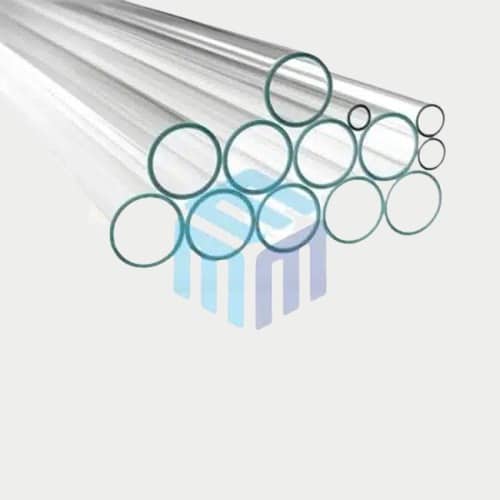
The meaning of a quartz tube lies in its form and function: a transparent, heat-resistant tube that supports controlled environments, typically for heating or chemical interaction.
Importance of Quartz Tubes in Industrial and Scientific Applications
Quartz tubes are vital in industrial and scientific fields due to their thermal, physical, and optical properties. Made from nearly pure silicon dioxide (SiO₂), they resist high temperatures, thermal shock, and chemical corrosion. Quartz Tube in India is widely used in quartz tube furnaces, where they withstand temperatures above 1000°C, ensuring durability in material testing, annealing, and semiconductor fabrication. In research, quartz thermocouple tubes provide contamination-free results as quartz resists most chemicals. Quartz Glass Tubing in India is also used in UV lamps, IR heating, and sterilization due to excellent UV/IR transmission. Their versatility makes them indispensable for precision and reliability in demanding applications.
Common applications include:
- Semiconductor fabrication
- Chemical vapor deposition (CVD)
- Laboratory heating
- UV disinfection systems
- High-temperature reaction vessels
In India, demand for quartz tube furnaces and quartz furnace tubes has risen sharply, particularly in research laboratories and industrial R&D centers.
Properties of Quartz Tubes
-
Thermal Properties
- High Thermal Stability: Quartz tubes withstand temperatures up to 1,050°C for prolonged periods and have a melting point of about 1,710°C, which makes them ideal for high-temperature processes. Quartz tube furnaces rely on these tubes for tasks like annealing, sintering, and chemical vapor deposition (CVD), as they deliver precise temperature control and uniform heating essential for industrial and laboratory applications.
- Low Thermal Expansion: Quartz has an extremely low coefficient of thermal expansion, so it doesn’t expand or contract significantly with temperature changes. This property gives quartz tubes excellent thermal shock resistance, enabling them to endure rapid heating and cooling without cracking.
- Heat Resistance: Quartz tubes resist thermal cycling effectively, making them perfect for applications that demand consistent and repeated exposure to high temperatures.
-
Optical Properties
- High Transparency: Quartz tubes are highly transparent to a broad spectrum of light, including ultraviolet (UV) and visible light. This makes them suitable for optical and photonics applications.
- UV Transmission: They have excellent UV transmission, which is crucial for applications such as UV sterilization and photolithography.
- Optical Clarity: The optical clarity of quartz tubes makes them suitable for use in scientific instruments, optical fibers, and other applications requiring precise light transmission.
-
Chemical Properties
- Chemical Inertness: Quartz is chemically inert and highly resistant to most acids, bases, and solvents. It does not react with most substances, making it ideal for use in corrosive environments.
- Purity: They are available in very high purity levels, which is essential for applications in semiconductor manufacturing, where contamination must be minimized.
-
Electrical Properties
- Electrical Insulation: Quartz is an excellent electrical insulator, even at high temperatures. This property makes quartz tubes suitable for use in high-temperature electrical insulation applications.
-
Mechanical Properties
- Durability: They are mechanically strong, though they can be brittle. Their resistance to thermal shock contributes to their durability in high-temperature applications.
- Hardness: Quartz is relatively hard (7 on the Mohs scale), providing good scratch resistance and maintaining its structural integrity under mechanical stress.
Applications of Quartz Tubes
-
Laboratory and Scientific Use
- High-Temperature Furnaces: They are used as reaction vessels or protective enclosures in high-temperature furnaces due to their ability to withstand extreme heat and thermal cycling.
- Chemical Reactions: Their chemical inertness makes them ideal for conducting reactions involving aggressive chemicals or for processes requiring a contaminant-free environment.
- Spectroscopy and Optical Instruments: The optical clarity and UV transparency of quartz tubes are essential in spectroscopy, where they are used as sample containers or light guides.
-
Semiconductor Manufacturing
- Diffusion and Oxidation Processes: Semiconductor manufacturers widely use quartz tubes in diffusion and oxidation furnaces because their high purity and thermal stability are essential for reliable results.
- Wafer Processing: Quartz tubes enclose semiconductor wafers during high-temperature processes, ensuring minimal contamination and uniform thermal distribution.
-
UV Sterilization and Disinfection
- Germicidal Lamps: Quartz tubes play a vital role in UV germicidal lamps, as their high UV transmission enables effective disinfection of air, water, and surfaces in medical, industrial, and residential applications.
- Water Purification Systems: Quartz tubes protect UV lamps in water purification systems while ensuring efficient UV light transmission for reliable disinfection.
-
Industrial Applications
- Heating Elements: They are used as protective sheaths for heating elements in industrial furnaces and heaters, particularly in processes that require uniform and controlled heating.
- Glass Manufacturing: In glass production, quartz tubes can be used to house high-intensity lamps or as part of the equipment used in glass processing.
-
Optical and Photonic Devices
- Optical Fibers: Manufacturers use quartz tubes in optical fiber production because their transparency and purity ensure efficient light transmission with minimal signal loss.
- Laser Systems: Quartz tubes serve as beam guides or enclosures in laser systems, taking advantage of quartz’s high optical clarity and excellent heat resistance.
-
Environmental Monitoring and Sensing
- Gas Analyzers: They are employed in environmental monitoring equipment, such as gas analyzers, where their chemical resistance and transparency are crucial for accurate readings.
- Aerosol Research: In aerosol research, quartz tubes are used to collect and analyze particulate samples, leveraging their inertness and thermal stability.
Also Read: Alumina Tubes vs. Quartz and Silicon Carbide Tube
Summary
Looking for premium-quality Quartz Tubes in India for your industrial or laboratory applications? Get in touch with M-Kube Enterprise today for expert guidance and competitive pricing!
M-Kube Enterprise is an Indian company specializing in customized laboratory products, consumables, and solutions. We proudly serve clients across India, Australia, the USA, New Zealand, Singapore, Malaysia, South Korea, Dubai, the Philippines, Indonesia, and Vietnam.