

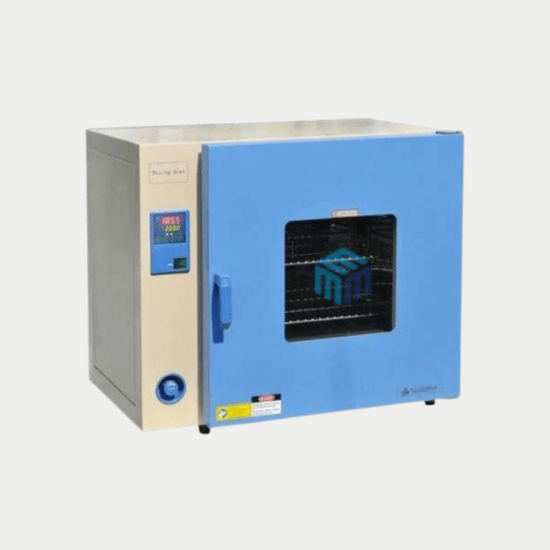
When precise temperature control and contamination prevention are essential, a laboratory vacuum oven is a game-changer. At M-Kube, we offer reliable Vacuum Oven similar to the trusted Thermo Scientific Lab-Line Vacuum Oven, tailored for research and industrial needs across India. Whether you require a small vacuum oven for lab-scale experiments or a robust lab vacuum oven for advanced processing, our portfolio delivers consistent performance and safety. From gentle drying and degassing to curing under controlled conditions, these ovens ensure your materials are treated with the precision they deserve. Here are the main benefits and uses of laboratory convection ovens:
Benefits of a Convection Oven in Labs
-
Uniform Heat Distribution:
- The built-in fan circulates hot air evenly, ensuring consistent temperatures throughout the chamber, which is critical for applications requiring precise, uniform heating.
-
Reduced Drying Time:
- Convection ovens allow for faster drying times by moving heated air across samples. This benefit makes them efficient for drying, curing, and dehydration processes in labs.
-
Temperature Stability and Control:
- Laboratory convection ovens are designed with precise temperature controls, allowing for stable, consistent heating. This is essential for repeatable results and minimizes errors in sensitive applications.
-
Energy Efficiency:
- By reaching and maintaining desired temperatures quickly and consistently, convection ovens in labs are more energy-efficient than conventional ovens, saving time and resources.
-
Enhanced Safety Features:
- Many lab-grade convection ovens include safety features such as over-temperature alarms, automatic shut-off, and heat-resistant doors, which help reduce the risk of accidents in laboratory environments.
Uses of Convection Ovens in Labs
-
Drying and Dehydration:
- Convection ovens are widely used to dry samples, glassware, or equipment by evaporating moisture quickly and evenly, essential in preparing samples for weighing or further analysis.
-
Curing and Polymerization:
- In material science and chemistry labs, convection ovens are used to cure polymers, adhesives, and coatings, which requires precise, consistent heat to achieve optimal material properties.
-
Baking and Aging:
- Convection ovens help simulate aging by exposing materials to specific temperatures over time, useful in testing the durability and longevity of products, such as rubber, plastics, and coatings.
-
Sterilization:
- Used to sterilize non-flammable equipment, tools, and glassware by heating to temperatures that destroy microorganisms. Convection ovens are an alternative to autoclaves for items sensitive to moisture.
- Annealing and Heat Treatment:
- Metals, ceramics, and alloys undergo annealing in convection ovens to relieve internal stress, enhance ductility, and alter mechanical properties, crucial for applications in metallurgy and materials research.
- Evaporation of Solvents:
- Labs use convection ovens to evaporate solvents safely from chemical mixtures. This is especially beneficial in preparing samples for qualitative and quantitative analysis.
- Moisture Content Analysis:
- Convection ovens are commonly used to measure moisture content in various materials. Samples are dried at controlled temperatures to constant weight, allowing accurate measurement of residual moisture.
- Sample Pre-Treatment:
- In analytical labs, convection ovens pre-treat samples by removing moisture, and stabilizing them for testing in procedures like chromatography, mass spectrometry, and elemental analysis.
When Not to Use Convection Ovens in Labs
Convection ovens may not be suitable for highly volatile materials or samples sensitive to oxidation due to the circulating air, which can encourage reactions. In such cases, vacuum ovens or inert gas purged systems are preferable.
In summary, laboratory convection ovens provide reliable, even heat for drying, curing, sterilizing, and other applications that require precise temperature control, making them indispensable for research, quality control, and analytical laboratories.
M-Kube Enterprise is an Indian company catering customized laboratory products, laboratory consumables, and laboratory solutions in India, Australia, the USA, New Zealand, Singapore, Malaysia, South Korea, Dubai, the Philippines, Indonesia, and Vietnam.