

Silicon carbide heating elements are widely used in high-temperature furnaces because of their excellent thermal performance, durability, and oxidation resistance. Whether used in a silicon carbide heating element furnace or as a silicon carbide rod heater, these elements are critical for achieving uniform and efficient heating.
However, not all Silicon Carbide Heating Elements are the same. A key distinction lies between high density (ultra-high density) and regular (low density) SiC heating elements. Understanding this difference is essential when selecting the right product from reliable SiC heating elements suppliers.
What Are SiC Heating Elements?
SiC heating elements are electrically resistive components made from silicon carbide, designed to operate at temperatures up to 1600°C or higher. They are commonly used in:
- Laboratory furnaces
- Industrial heat treatment systems
- Ceramic and glass processing
- Metallurgical applications
According to ScienceDirect, silicon carbide offers excellent thermal conductivity and oxidation resistance, making it ideal for high-temperature heating.
Density Comparison – Ultra-High vs Regular SiC Heating Elements
Before choosing between types, it is important to understand the actual measurable differences between ultra-high density and regular SiC heaters.
Key Technical Differences
-
Density & Porosity
-
- Regular SiC heater:
- Density: ~2.5 g/cm³
- Porosity: ~20%
- Ultra-high density SiC heater:
- Density: ~2.9 g/cm³
- Porosity: ~6%
- Regular SiC heater:
👉 Lower porosity in ultra-high density elements results in better structural integrity and reduced oxidation penetration.
-
Maximum Operating Temperature
-
- Regular SiC heating element: ~1400°C
- Ultra-high density SiC heating element: ~1600°C
👉 Higher density enables operation at more demanding temperature ranges.
-
Service Life & Corrosion Resistance
-
- Ultra-high density SiC heaters show up to 4× longer service life (based on lab tests and client trial runs)
- Improved anti-corrosion performance due to advanced manufacturing techniques
le=”font-weight: 400;”>👉 This makes ultra-high density elements ideal for continuous and harsh industrial environments.
High Density (Ultra-High Density) SiC Heating Elements
Properties
- High density, low porosity structure
- Excellent oxidation resistance
- Strong mechanical integrity
- Stable electrical resistance
Advantages
✔<span class=”yoast-text-mark” style=”font-weight: 400;”>> Longer lifespan (up to 4× compared to regular)
✔ Higher temperature capability (up to ~1600°C)
✔ Better corrosion resistance
✔ Stable performance in aggressive atmospheres
Applications
- Continuous industrial furnaces
- Ceramic and glass kilns
- Metallurgical heat treatment
- High-end research furnaces
Low Density (Regular) SiC Heating Elements
Properties
- Lower density, higher porosity
- Faster oxidation over time
- Lower mechanical strength
Advantages
✔> Significantly Lower silicon carbide heating element price as compared to the high density silicon carbide heating element
✔ Suitable for moderate temperature use (~1400°C)
✔ Faster initial heating response
Applications
- Laboratory furnaces
- Batch processing
- Intermittent heating operations
- Cost-sensitive applications
Choosing the Right SiC Heating Element
Selection depends on:
- Required muffle furnace / furnace temperature
- Continuous vs intermittent operation
- Furnace atmosphere (oxidizing/reducing)
- Budget vs lifespan expectations
Quick Recommendation
- 🔥 Ultra-high density SiC heater → Industrial, continuous, high-temp use
- ⚙ Regular SiC heater → Lab, intermittent, cost-effective use
Factors Affecting Silicon Carbide Heating Element Price
The silicon carbide heating element price depends on:
- Density (ultra-high vs regular)
- Operating temperature rating
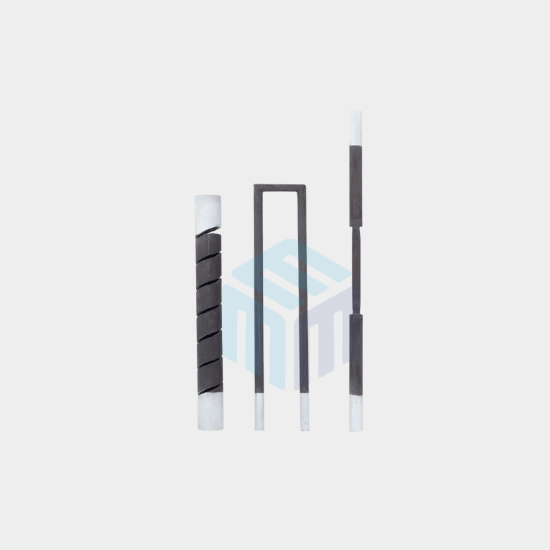
- Size and geometry (rod, U-type, spiral)
- Manufacturing quality
- Supplier reliability
Choosing a trusted SiC heating elements supplier ensures better long-term ROI.
Looking for premium silicon carbide heating rods, silicon carbide heater, or advanced ultra-high density solutions?
Get expert guidance and the best silicon carbide heating element price from trusted SiC heating elements suppliers.
📞 Call : +91-9898892994
📧 Email: marketing@mkubeenterprise.co.in
Boost furnace efficiency and lifespan with the right SiC heating solution.
Conclusion
The difference between high density and low density SiC heating elements is not just technical — it directly impacts furnace performance, lifespan, and operating cost.
With higher density (2.9 g/cm³), lower porosity (6%), higher temperature capability (1600°C), and up to 4× longer life, ultra-high density SiC elements clearly outperform regular variants in demanding environments.</span>
However, for laboratory or intermittent use, regular SiC elements remain a cost-effective solution.
Selecting the right silicon carbide heating element furnace components ensures optimal performance, energy efficiency, and long-term reliability.