

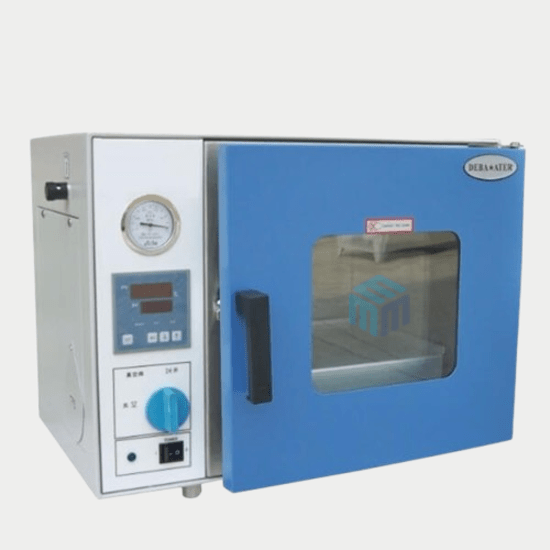
A Vacuum Oven is widely used in laboratories and industrial facilities for drying, curing, degassing, and heat treatment of sensitive materials. While vacuum technology itself helps reduce oxidation and moisture, many advanced applications also rely on inert gas purging to further improve process safety, product quality, and drying performance.
Whether used in a laboratory vacuum oven, vacuum drying oven, or small vacuum oven, inert gas purging plays a critical role in protecting sensitive materials from unwanted reactions during heating and vacuum processing.
What Is Inert Gas Purging in a Vacuum Oven?
Inert gas purging refers to the process of introducing non-reactive gases such as:
- Nitrogen (N₂)
- Argon (Ar)
- Helium (He)
into a lab vacuum oven chamber before, during, or after vacuum operation.
The purpose is to displace oxygen, moisture, and reactive gases that may affect the material being processed.Why Inert Gas Purging Is Important
1. Prevention of Oxidation
Many materials are highly sensitive to oxygen exposure during heating.
Examples include:
- Pharmaceuticals
- Electronic materials
- Metal powders
- Specialty chemicals
By purging the chamber with nitrogen or argon, oxygen concentration is reduced significantly, preventing oxidation and degradation.
This is especially important in a laboratory vacuum furnace handling heat-sensitive or reactive compounds.
2. Improved Drying Efficiency
Inert gas purging can enhance drying performance by:
- Assisting vapor removal
- Reducing residual moisture
- Improving pressure stability inside the chamber
Controlled atmospheres improve thermal process consistency and reduce contamination risks.
3. Protection of Sensitive Samples
Some materials may react chemically under vacuum if oxygen or humidity remains inside the chamber.
Inert gas helps protect:
- Hygroscopic compounds
- Lithium battery materials
- Semiconductor components
- Advanced polymers
This makes inert gas purging highly valuable in modern lab vacuum ovens.
4. Enhanced Process Safety
Certain solvents or vapors can become hazardous under heat and vacuum conditions.
Inert gas purging:
- Reduces flammability risk
- Prevents explosive mixtures
- Improves operator safety
This is particularly critical when processing volatile solvents in a vacuum drying oven.
5. Better Temperature Uniformity
Gas circulation within the chamber can improve heat transfer and temperature stability.
This results in:
- More uniform drying
- Reduced hot spots
- Improved process repeatability
High-end systems such as a thermo scientific lab line vacuum oven often integrate inert gas purging capabilities for enhanced performance.
Common Inert Gases Used
Nitrogen (N₂)
Most commonly used due to:
- Low cost
- Good availability
- Excellent oxidation prevention
Argon (Ar)
Preferred for:
- Highly reactive materials
- High-temperature applications
Helium (He)
Used in specialized applications requiring superior thermal conductivity.
Factors Affecting Vacuum Oven Performance
The performance of a Vacuum Oven depends on:
- Vacuum pump efficiency
- Chamber sealing quality
- Inert gas purity
- Temperature control
- Chamber size and design
These factors also influence the overall vacuum oven price and vacuum oven price in India.
Choosing the Right Vacuum Oven
When selecting a laboratory vacuum oven or small vacuum oven, consider:
✔ Inert gas purging compatibility
✔ Digital vacuum and temperature controls
✔ Chamber material quality
✔ Safety interlocks
✔ Application-specific temperature range
Advanced systems provide automated purge cycles and programmable operation for improved efficiency.
Conclusion
Inert gas purging significantly enhances the performance of a Vacuum Oven by improving oxidation control, drying efficiency, process safety, and temperature uniformity. Whether used in pharmaceuticals, electronics, chemicals, or advanced materials processing, this technique ensures reliable and repeatable thermal processing results.
For laboratories seeking higher product quality and safer operation, investing in a laboratory vacuum oven with inert gas purging capability is a smart long-term decision.
Looking for a high-performance Vacuum Oven, vacuum drying oven, or lab vacuum oven with reliable inert gas purging capability?
📞 Call +91 9898892994
📧 Email marketing@mkubeenterprise.co.in
Get expert guidance and competitive vacuum oven price in India for your laboratory and industrial applications.